Jazz Odyssey: Venna on his debut album Malik, global sounds, and music as feeling

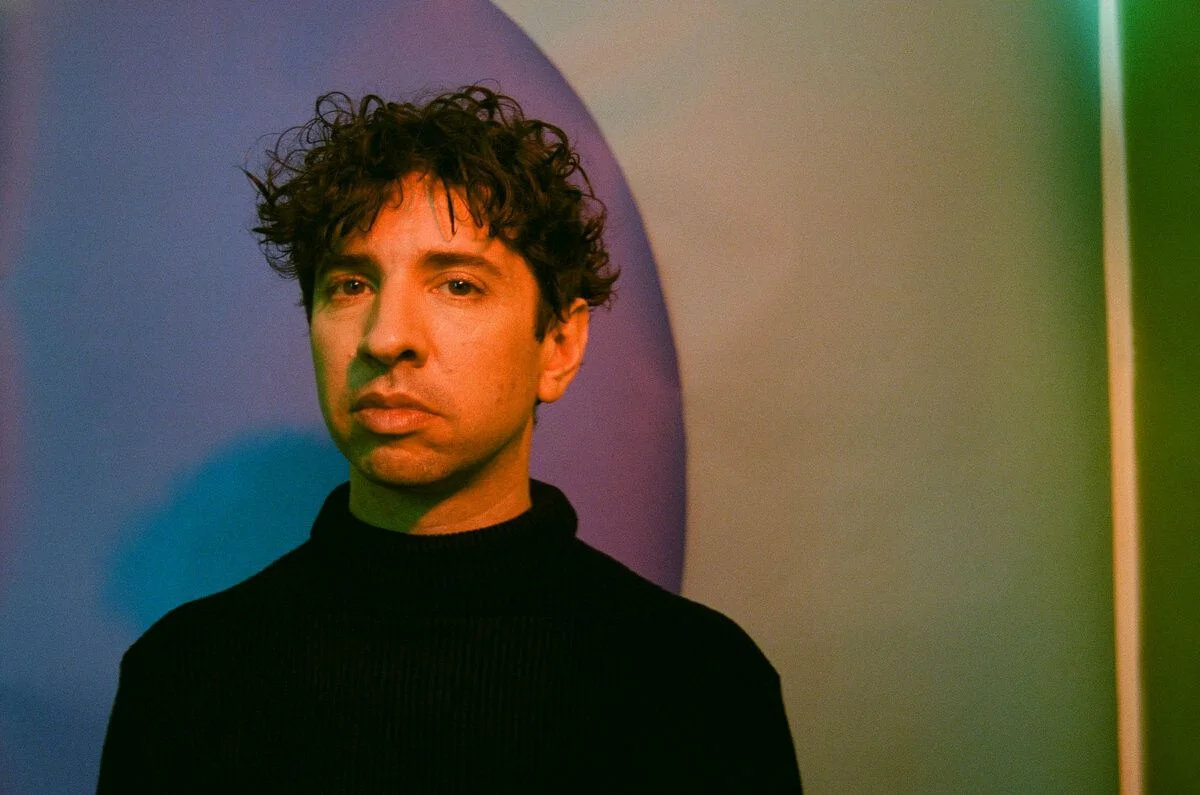
An interview with saxophonist and producer Venna by alldaywes
There’s a certain kind of energy that can only be experienced live, the kind that hits before you even realize what’s happening. I caught saxophonist and producer Venna playing with the Yussef Dayes Experience at Newport Jazz Festival last summer, and it was one of those moments. The chemistry, the tone, the confidence—it was undeniable. So with Venna bringing his solo project to Denver on February 7 at Cervantes, it felt like the perfect time to sit down and talk about his debut album, Malik, his journey, and the philosophy behind his sound.
alldaywes: What do you think was that first moment that really connected you to the saxophone and pulled you toward it?
Venna: I got sent to a boys' school when I was like 12 years old, or 11 or 12. And there's a guy in the year above me who played saxophone. And I already used to play piano, but I kind of liked how the saxophone was gold. I think that's what kind of like gravitated me towards it visually. And then I just liked how it sounded. So I asked my mum, can I start? She said, cool, you can do a term of doing sax and piano. And then at the end, you choose which one you want to do. And then at the end of the term, I was like, you know what, I'll stick with the saxophone.
alldaywes: Really? So it started with piano, then learned the saxophone. That's funny though, you say the gold. I mean, I know you're real aesthetic. Every time I've seen you, you're rocking like the coolest fits.
Venna: No, I appreciate it, man. I appreciate it, man. I guess it started early with the saxophone, man.
alldaywes: Well, where did your like musical identity of Venna start to take shape?
Venna: I guess when I was like 16, 17 or so, it started coming together, man. I think. I was in college. I was always doing stuff for other people and making music for other people. But I think when I was like, I think 2020, when I was in lockdown, I was like, I need to focus on what I need to do. And I just started making music with my good friend Marco Bernardis in lockdown. And then I think that's how I started kind of cultivating the sound that, well, that's the start of the sound that we have right now. So it's around l ike 2019, 2020.
alldaywes: Yeah, because I know you had your two EPs, you had the years of touring on the road. What kind of made it feel like the right moment for your debut album?
Venna: I was meant to do another EP. The paperwork that I signed was for another EP, but I just, when we started making the music, it felt a lot bigger than just another EP. So I kind of just said to everyone, scrap it. And they're like, well, you're bound by paperwork. I said, nah, man, we got to just switch it, man. It feels so much bigger than an EP. So I appreciate everyone that listened and we made it sound bigger than another EP and we made it the album. So that's what happened with that one.
alldaywes: Yeah, because I know that you described the journey of Malik as being a whirlwind. What do you think those years of touring kind of taught you about yourself?
Venna: I think it definitely taught me a touring game and how to sell merch and how to make a business of live music at least. It's definitely not easy. I think everyone thinks that you go on tour and now you make a whole bunch of money, but there's different objects and different kind of things that happen that can deter that or can help that or hinder it as well. But I think touring in general just also taught me about how to like kind of coordinate a team and be quote unquote a leader, even though we're all leaders in our own right as well. But it just taught me how to just also be around like people that you ain't necessarily been around all your life with this and the other, but these are your friends and family that you're with on the road for the next three weeks. So with Yusef and that we've been touring for four or five years. By the time I went on tour with Yusef and them lot, I've met them enough times, but you really get to know people on the road and when you're touring and that's when you really get to know people and see, I guess, every side and every corner of people, man. So that's what touring really taught me about people and myself I guess.
alldaywes: So growing up in London, how did the city and the scenes kind of influence your approach to music? You know, the music coming out of the UK right now is just so special and some of my favorite.
Venna: 100%. I think I had an interesting one with growing up in London. I feel like I was influenced by London, Jamaica and New York also, because my father was from New York. So I'd always come to New York and my dad thinks he's a human jukebox and he's always playing records and disco and house and funk and jazz and whatnot. And he's always trying to put me into stuff. So I think there's that element of also the American side of influence of music. But also in London, it was like, there's a lot of reggae influence, there's a lot of R&B out there. And I think I managed to blend a lot of worlds into one. And that's what I've always tried to do at least. And I think that's the way that music can continue growing and getting better is if you keep blending different genres and different just feng shuis and ying and yangs and things, you get me? I think that's the only way that music, that's what I try to do at least. So I think a lot of environments has allowed my music to be the way it is right now. And especially touring as well, because then I'll be, we'll go Brazil on tour, have a show in Brazil, I hear some rhythms and some feelings that I've never heard in London or Jamaica or New York. And then I'm like, oh, I've got to bring that over here now. That's how like records like the Leon Thomas joint was made, Twisting or the “Myself” record with Jorja Smith. It's like certain places and certain rhythms just like alter the brain chemistry a bit for me, ya get me?.
alldaywes: Yeah, it's like it's that blending of cultures and everything kind of like I saw you mentioned something about how like people are quick to label music with horns as jazz, but why has it been important for you to kind of resist the genre boundaries and create in your own space?
Venna: You know what it is? It's like I love jazz. Jazz is definitely my foundation and my roots of everything. And it's definitely the root of saxophone and all of all those things they're about. people definetly box things in without really looking into the dexterity of how things, how deep things are certain are. So even the Malik album, I think there's literally like”Eternal Reflections”, featuring Yussef Dayes, that's one jazz record. The foundation of it's jazz, but it's like, I think to call it just straight cut jazz is like, I think that's a lie. Yeah, I think there's more bossa nova and like R&B and soulful essences in it than anything else. Well, of course, like all the music is rooted in jazz, so I think I guess I understand where they will come from, but I think it's a lot more vast than just jazz. And I love jazz. I'm not trying to disown jazz, but I think it's a lot more than just labeling it jazz. That's it really for me.
alldaywes: You've worked across all these different spaces and with all these different people that you're talking about. What do you look for when you're working on collaborations?
Venna: The best of the best. I think that's it really. Who’s the best drummer who can give me the grooves and the rhythms that I need. He's the best bass man that can give me the best bass line or groove. And then once we have all the music, it's like, okay, who would complement this song? It's not about who's the biggest or who's doing well right now. It's like, can I hear their tone of voice or do I like their style of rhyme? Do I like the melodies they choose? Are they the people that will complement the music in the right way? So I think that's the approach I go with collaborations at least.
alldaywes: And quite the list of collaborators that you have on the album, not only vocalists, but the band you're working with too, like Rocco and Yussef and Elijah Fox. It's just, it's an amazing project. So I've seen you say that you see yourself as a vessel for your music. What does it actually feel like when you're in the studio? What's that feeling like?
Venna: It's different every day. It's like, I feel like it's like going to work. I feel like some people are happy to go work, maybe some aren't. Each day is different. So I think that's what the beauty of music as well is. It's like it's a feeling, isn't it? So if I'm a bit angry or annoyed or irritated by something, that will definitely influence the feng shuis and the tone and the tonality of the day. If I'm happy, we might make some happier stuff that day. But I think when we're really locked in, it's like a, I don't really remember nothing when we're making it if we're really locked in. I think it's more like a blur at the end and we're just like, oh, this is what we're, this is what we made today. Okay, cool, move on to the next, move on to the next. Then I don't think we really realise what we made until that next day and in some instances, like a week later, there was a session in LA where I was with Rory, our engineer, and Yussef, and I had some cats in LA, and when we was playing things back, we weren't really feeling the feng shuis too much. And then a week later, we went to another studio, Jason Joshua's studio, the legendary engineer in LA, and we were like, oh, yeah, we got 2 joints here, and that's how “Indigo” and “Eternal Reflections” were made. So sometimes you don't even know what you got in the moment until like later on, but the feeling is definitely like we just let ourselves go in away. I don't really, it's not really a conscious moment. It's kind of like a, I don't know how to explain it, man.
alldaywes: I mean, we're all human. Like I get that how you're talking about your emotions and stuff playing into it, but I feel that about how you're kind of reaching like a flow state in studio.
Venna: Yeah, definitely.
alldaywes: I was wondering, how does your role change when you're in that position of supporting another artist or playing in a band versus when you're leading your own project? What's the difference there?
Venna: It depends on the artist and who I'm assisting. But I guess with my music, I have the final say, and it's the definitive say, and people can advise me, no, or I think maybe different, but at the end of the day, I have the definitive say. Whereas with other people's music, they have the definitive say, so you get me? So I think that's it. I'll still, no matter who's music I'm working on, I always... advise as I think, what I think, I'll never hold back on my opinion, but whether someone to take the opinion, that's the only difference really.
alldaywes: Yeah, owning it and then also knowing that level of respect.
Venna: Yeah, literally. And like, if someone I respect and value their ears says to me, yeah, I think we should change this or this, I'll take it on. But yeah, everyone knows that works with me. I'm an interesting character to work with at times. I'm very particular about things. So I also understand if I advise someone and they don't want to take it also, because I'm very particular and very precious over this stuff as well. So I also get it.
alldaywes: It's really cool that you have honed that trust in yourself.
Venna: Yeah, I think you have to, otherwise the outside voices can just throw you off and then you end up never releasing anything.
alldaywes: Yeah, so this is a question I like to ask everybody that I talk to is... What are you listening to right now? What's catching your ear?
Venna: What am I listening to? I've been listening to a lot of old stuff nowadays. No, I've been listening to some Slum Village in my, I see some Slum Village in my likes. I see some Anderson Pack from them. I like me while I'm in my likes.
alldaywes: Yes.
Venna: I see some Jagged Edge in my likes.
alldaywes: Okay, yeah.
Venna: I see some Tiffany Goucher in my likes. I see there's an artist called NALI. Okay, this is a new shout. N-A-L-I. She's opening for me in New York. She's great. I love all her stuff that she's been dropping recently. So that's an honorable mention. If I need to give a song, I'll say NALI “No Spaces”. That's a good one.
alldaywes: Love the recommendation. Yeah.
Venna: Yeah, that's my recommendation of the day. You get me?
alldaywes: Last one I got for you is for everyone that's coming to your show in Denver or people that might have not heard, I play your music on my show.
Venna: Appreciate that.
alldaywes: Of course. What do you hope that they discover while listening to your music or even just seeing you perform live?
Venna: With music, I just, with the music that we make at least, the only thing I actually want the listener to have is some sort of feeling, whether it's happiness, sadness, as long as not no angry stuff and you start punching walls, I don't want none of that. But like, as long as it evokes an emotion and you feel something, that's my main essence of it really man. I'm not here for them to, I'm not going to say I want them to discover themselves and this and that. I don't want none of that. If they do, then great. If they don't, It's alright same way. But I think the main thing is, as long as they feel something, element of warmth, element of sadness, whatever it is, because sadness is also an emotion that you got to also equip to be able to appreciate the happy days, you get me? So, as long as it evokes an emotion, I'm cool. That's my main thing, man. Like the music's therapy, man, at the end of the day, or essence of that so... As long as people feel something, that's my main thing, my friend.
alldaywes: I think that's really cool, because it's like, you know, you got to open yourself up to experience something. And then it's up to you to kind of translate what that means to you.
Venna: 100%, man. And yes, like, I can't tell no one how to feel or what to discover in themselves. I would rather not even hope for anything. The only thing I want is them to feel something. That's it.
alldaywes: Yeah, truly can't wait to come see you perform your solo project. I hope your tour goes amazing and can't wait to see you here in Denver.
Venna: Thank you man, much appreciated, man. Make sure you come say hi as well. I'll be at the merch stand after the show, man. I'll be there.
alldaywes: You guys doing vinyl?
Venna: Yeah, we'll have the new batch of Vinyl by then. So yeah, we'll have some Vinyl there for you.
alldaywes: Let's go. Yeah, awesome.
Venna: Bless. I appreciate your time, man. Thank you Weston.
alldaywes: Of course. Yeah, you too. Be blessed. Be safe. Thank you so much.
Venna: Much luck, man. Peace.
Venna’s music doesn’t ask to be analyzed or categorized, it just asks to be felt. Whether through the recordings of Malik or the energy of his live band, his work leaves space for listeners to bring their own experiences into the sound. That openness, rooted in jazz but shaped by global influence and lived emotion, is what makes Venna’s voice feel both personal and expansive.
Malik was one of my top albums of last year, and seeing Venna step fully into his own space as a bandleader feels like watching something inevitable finally arrive. If you’re catching him live, especially here in Denver, come ready to feel something.
Stay connected to KUVO’s programs and our community! Sign up for the Oasis E-News today!