
Live & Local: Feel the Beat dance studios feature new tech for deaf and hearing impaired

Dance is for everybody! Even for the deaf and hearing impaired, thanks to an innovative dance floor pioneered by Feel the Beat Dance Studios. Haley Cohen, program manager for Feel the Beat Dance Studios, says the vibrotactile dance floor, already installed at dance studios in Lakewood, Westminster, and Centennial, is being adopted by dance studios around the country.
This interview above has been edited for length and clarity:
Steve Chavis: Dance is for everybody. Music is for everybody, even the hearing-impaired. We're about to blow your mind because Haley Cohen from the Feel the Beat Dance Studio and her collaborators there are making the sounds of music accessible to everybody, whether they're hearing or not. And it's all coming out of Feel the Beat Dance Studio. Welcome to KUVO.
Haley Cohen: Thank you. Thanks for having me.
Abi Clark: Thanks for being here. You're the program manager at Feel the Beat.
Haley Cohen: Correct.
Abi Clark: And you have a background in deaf education. What led you to this organization?
Haley Cohen: Yeah, there is a couple things. I mean, my background was working with the deaf community prior to coming to Feel the Beat. I was working at Rocky Mountain Deaf School here in Lakewood. And then my partner is actually a wheelchair user. He has a spinal cord injury, and we serve all abilities at our studio, including deaf and hard of hearing. So I had a personal connection to just working in the disability community at large.
Abi Clark: The magic that happens at this studio has a lot to do with the floor because it brings the music, the rhythms, the vibrations into the body and it becomes a sensual experience. Co-founders and deaf educators Jari Majewski-Price and Julia Faliano created this. I was reading online. It started out with a bass shaker and an upside-down sock drawer. What's the origin story of this incredible one-of-a-kind floor at the studio?
Haley Cohen: Yeah, I mean, they were working. in a multiple needs classroom, both of them as educators, and they saw a need for inclusive programming at large, but they have a shared love for music, movement, and dance. And with their background, they decided to start a dance program, essentially, for deaf and hard of hearing, which eventually also led to the larger community of serving all various needs. So they were just renting out of a studio, doing a class once a week, and and then building out the floor technology, doing a lot of different versions, demos, seeing what worked, what could sustain people standing on it dancing. And then eventually they came up with the floor we have now, which basically have large transducers in them. So they work similar to the technology in a hearing aid, but they're just on a very large scale and they sit underneath the floor itself. So it's a technology that's existed for a long time. but they just basically evolved it and turned it, used it in a way that hadn't been used before. So it's very innovative.
Steve Chavis: I envision like dance clubs with big red lights for the bass notes or yellow lights for the treble notes. But this is moving the sound actually into the floor.
Haley Cohen: Yeah, it's hard to explain until you really get to just stand on the floor and experience it because yeah, it's not just going to be one constant like beat or bass, it's going to be all the subtleties so that you feel within bone conduction technology. So it's something that is a full body experience that can be enjoyed by a lot of different types of individuals, including those that are hearing, but maybe have sensory processing disorders or want to have a grounding sense of a feeling that they have going up and down their body.
Steve Chavis: It's called a vibrotactile dance floor. This thing is genius.
Abi Clark: I'm sure this is the first time a lot of folks have felt the music through that floor. What are some of the experiences that you've seen others go through as they walk onto the dance floor and do dance with something that connects with their body in that way?
Haley Cohen: Yeah, I think it's really powerful for individuals. It allows them to engage into the music and movement in a way maybe they wouldn't otherwise. It can be helped for rhythm and keeping with the counts, but also just like sometimes we'll have our students just sit and lay on the floor and just like put on a song and just let that kind of be, again, like an anchoring sensation for them. So it can be used also in very like meditative, just grounding ways, especially for a lot of our kiddos who come in who have a lot of energy and kind of need something that's tactile for them to experience.
Steve Chavis: Do you get an eyes light up experience, I mean, the first time? What's the reaction when people step onto this floor and feel music for the first time?
Haley Cohen: Yeah, they're really just in awe. Like, I do really feel like they're just like, wow, this is incredible and unbelievable. And again, we've had like individuals come in who are wheelchair users who can feel it through their tire rims as well. So it's like, you don't have to have your feet on it. You can be sitting in a chair. We do a lot of seated modified class instruction and you can feel it no matter where you are on the floor. So it really does, I feel like, brings the experience of dancing to a whole new level.
Abi Clark: One thing that your website said is it benefits the deaf and hard of hearing individuals, those with sensory needs, it's inclusive, but it also benefits our entire community. Can you talk about how something like this, even though it's crafted for those who are deaf and hard of hearing, extends out in community and really affects us all as a large?
Haley Cohen: Yeah, I mean, I think that the disability community is a very large population, and at some point in our lives, We all may have a disability, just a natural aging. So I think anybody can really enjoy and experience just the joy of being able to feel like something very tangible as music through the floor. We do a lot of events as well, and our classes are for, while it is tailored and the curriculum is geared towards individuals who may need additional modifications, or adaptations, anybody can come and experience the floor. And so our floors are in a lot of spaces where anybody can sit and enjoy it, dance on the floor. We do a lot of public events. So it can be utilized in a lot of different settings and environments, including theaters, performing arts spaces, other dance studios. So, and we've been plugging into some of those places here in Colorado and elsewhere.
Steve Chavis: Elsewhere around the country?
Haley Cohen: Yeah.
Steve Chavis: I think if I get on this floor, I just like won't want to leave. And you're like, class is over now. You have to go. Play that one track again! I just want to, oh my goodness, it just sounds so, I think, attractive and endearing and connecting. in ways that just people don't experience before.
Haley Cohen: Yeah, absolutely. Yeah. And we have permanent installations of our floor that are in places and then we have mobile versions as well. So this can be shipped all over the country. And so if there is a school, a theater, a performing arts space of any kind, another dance studio, like we have this technology available to be, you know, provided to that space.
Abi Clark: It's year end, so y'all shared a lot of the amazing work that you've done this last year. I saw you have three facilities in Colorado. You expanded to Colorado Springs. You have a floor that has been installed in Wisconsin in one of their schools, and you've moved to New York City this year. So it's becoming this like global thing. And not only that, but you're also in our community, like 14 different community events. Like how talk about like that expansion as somebody that's so invested in the program and that movement must have been amazing.
Haley Cohen: So we actually are launching our 4th location here in Colorado on January 10th. Yeah, it'll be in Centennial at a space called the Performance Shift. And so we're really excited to be able to serve like the south part of Denver as well as like Castle Rock. Colorado Springs. We're offering programming there. And so, for me, just in my work, it's really meaningful to see the quality of enrichment that we're providing individuals who may not otherwise sometimes have it. And they get a go and experience, move their bodies, get that They get to build their strength, coordination, balance all these life skills that are really important for individuals. They get to develop that. And that's just really awesome for me to see as a program manager, that I'm making those connections, reaching out to those programs and getting something on the calendar.
Steve Chavis: We've met another person that actually has the best job in town.
Abi Clark: Yes!
Steve Chavis: I thought we did! You might have the best job in town.
Haley Cohen: We can all have the best job.
Abi Clark: That's right!
Haley Cohen: It doesn't have to be a competition!
Abi Clark: I would love to hear more about what the classes are like, because there were 222 plus classes offered in 2025, and that touched the lives of so many different people. Are they like free form? Is it like teaching a specific dance? Does it move all over the place?
Steve Chavis: First position, second position, third position...
Haley Cohen: Yeah, it's really dependent on the class that is coming in. So as a program manager, it's my job to really get to understand who, is going to be coming. But some of our classes, like we have drop-in classes that are just community open to anybody. You sign up, you come that week. And so we do have more of like an exploratory movement class for like our younger kiddos who need a place to have an outlet, but also a place that is for them. And so we really kind of let them lead in certain ways and in their interests. And then we adapt our curriculum to make sure that they're getting like a really great class, but also it's going to be something that is for their needs, for their interests, for their energy level. And then we have more structured classes where we're building upon the skills from the last week. And I think we're kind of always building on certain types of life skills as well as those movement and dance pieces. So we have like some more structured and more exploratory. Our movers classes for drop-in classes are more of the exploratory. And then our groovers are the ones where you're kind of building on things and over time being able to show kind of a certain skill set out of that class.
Abi Clark: Is there a connection with life and dance that you see? Because you're kind of said you're growing both the movement but also into like their own life skills.
Haley Cohen: Yeah, I mean, I think a lot of our individuals who come in have like different types of physical disabilities and being able to work on on those types of things, like coordination, balance, movement strengthening, like those are things that they might not naturally just be getting outside of a space where they're able to move their body. So we are really trying to just help, kind of, yeah, get them moving in general, but also in a very fun way that they'll want to keep coming back to. And most of our private classes, they come every month or every week. We've had some groups who've come for years every single week.
Steve Chavis: Or every day. Or Steve, you have to go now.
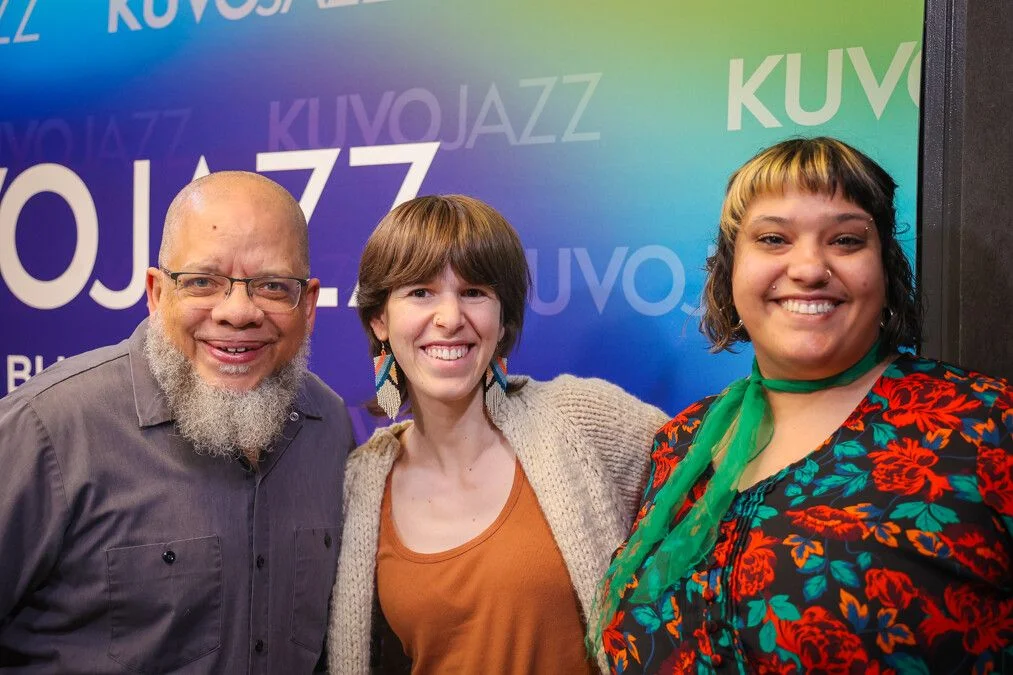
Photography credit: Will Ornberg, Radio Multimedia Producer
Stay connected to KUVO’s programs and our community! Sign up for the Oasis E-News today!


