NJU: On Hoodies and the Gen Z Link Between the Dance Club and Jazz Club

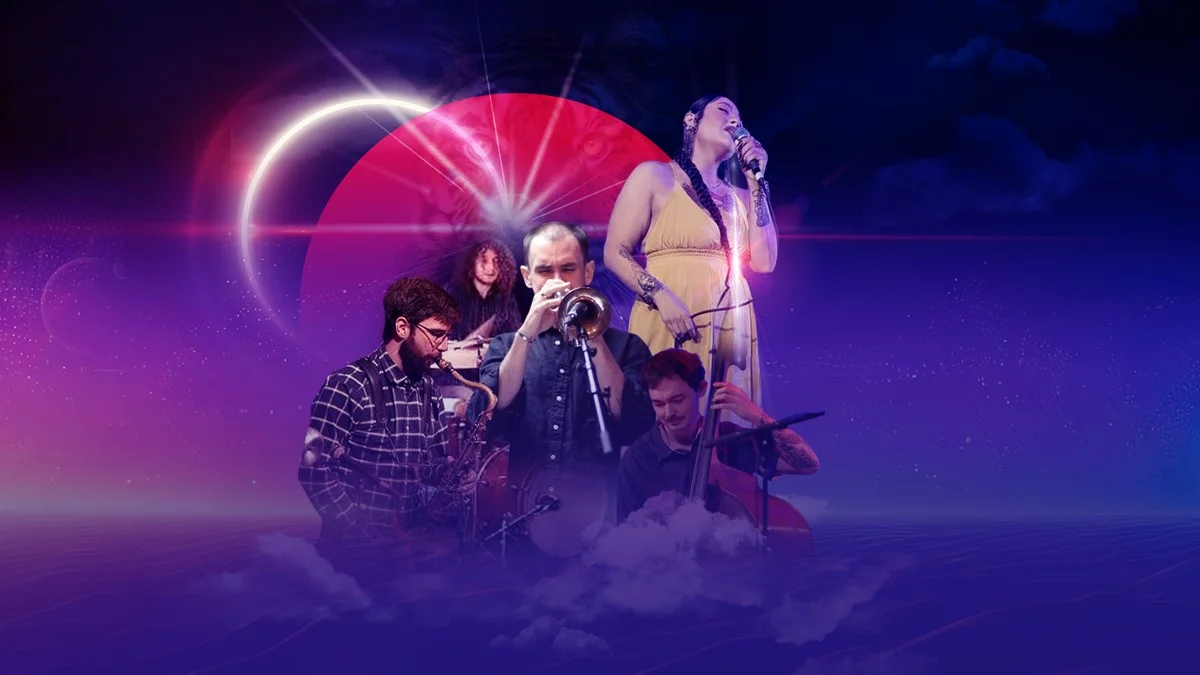
New Jazz Underground alchemizes their native Miami roots and classic jazz education into a sound that is authentic and definitive of the now. The young players take cultural touchstones like hip hop, reggaeton, and Afrobeat and root them in the tradition of acoustic jazz. Through their unique approach, bassist Sebastian Rios, saxophonist Abdias Armenteros, and drummer TJ Reddick offer a Gen Z gateway into the art form, inviting in a whole new generation of jazz fans.
Abdias Armenteros: Like so much already exists in the pressures of being a jazz musician, so much that you have to draw from, but definitely even more so as young musicians, where we're supposed to know music that is as old as 100 years ago to music that is as relative as like, Bad Bunny… that's why I feel like we're so relatable to people because it's like, we, are in these two worlds and these two worlds are a part of us
Their brotherhood began in the streets of NYC as students at Juilliard. After connecting with thousands of music-heads online through their jazzified MF DOOM SUiTE recorded from the NJU living room, the trio went on to self-release that suite in 2023, followed by a second EP, Dying of Thirst, in 2025, which reimagines the music of Kendrick Lamar. The band is now on the heels of releasing their debut album Hoodies on May 29, 2026. The tracklist is made up of staples from their catalog, all music close to the soul of New Jazz Underground, and their lead single, Hold my Halo (Paint me Perfectly), just dropped February 3, 2026.
Sebastian Rios: I wrote it at a very interesting time in my life where I was having relationship difficulties. And it's really about how somebody can see the best in you, hold your halo and paint you perfectly, paint you in a way that you should be as a person, and that you can be. It's about seeing a potential in other people and holding them to that, holding them to that, holding them to their highest angelic qualities, you know, holding their halo.
With an early and late set at Dazzle on February 18, Coloradans will soon get a chance to experience cuts from this anticipated record live in the Mile High. The Morning Set and Thursday night Jazz Odyssey host Abi Clark caught up with Sebastian Rios and Abdias Armenteros about the meaning behind Hoodies as well as what some of their other thoughts are around being a jazz musician in the modern music landscape.
This portion of the interview above has been edited for length and clarity:
Sebastian Rios: The record is called Hoodies. When we talk about hoodies, we're talking about how we dress, obviously. In jazz, the traditional thing, Abdias plays with Wynton, you wear a suit, you know, you look clean, but looking clean to us means something different. People like Virgil Abloh and Heron Preston, Kanye West, rest in peace, they're kind of an extension of, you know, hip hop culture, street culture. And so we're always, trying to integrate that into the music, but also still have it be jazz. That's the first aspect where it's like our dress. Second aspect of hoodies refers to, brotherhood, and being in the hood together. It refers to that time in the pandemic, because the pandemic, we had no places to play, nothing was open in the city. And it was actually a blessing for us in disguise because we didn't realize that we were developing our sound through just playing. We would show up in the parks and streets of New York City..
Abi Clark: Like Sonny Rollins style, out in the world?
Abdias Armenteros: Right!
Sebastian Rios: And like us being a trio was more from, you know, circumstance because you couldn't bring a piano out there or, you know, somebody bring a keyboard, you know, the cops would tell them to shut off the speaker, right? And so just being trio was like a functional thing, And just in that time, we had so much time to dream and scheme and just, even though the kind of world was falling apart around us, we had each other to depend on and look for a future together. Not only a future, a present, where we're playing, jazz is all about being in a present, right? And Hoodies, brotherhood is a representation of that. And then the last aspect, Hoodies, I'm a Latino male, TJ and Abdias are black male in America, young men of color. A hoodie puts a target on your back, referring to Trayvon Martin and I mean, so many others. I had a friend named Israel ‘Reefa’ Hernandez. He was an incredible, incredible artist. And he was taken from us way too soon by the police when he was 18 years old. And I think this album is a representation of what those young men could have done with their lives had they been given the chance. Luckily, we were given a chance. There were so many opportunities in my life where things could have gone left, like quickly. You know, the types of situations I put myself in and, you know, whatever. But the fact that we were able to live, the fact that somebody didn't take our lives, that's so meaningful. And this album's really for those folks that we lost.
Abi Clark: What a statement, especially with everything that we're seeing going on in the world to come together with this album and really sit on that. You bring that acoustic element to the music. And like you said, even though you're referencing Bad Bunny, you're referencing Kendrick Lamar, you have that acoustic rooted sound to the jazz. You guys learned from, you know, the masters, Ron Carter, Wynton Marsalis, Abdias, you’re the youngest member of the Lincoln Jazz Orchestra. When I talk to older jazz listeners, I mention your name often because I feel like as somebody that is on a show that is about jazz and other genres, The Jazz Odyssey here on KUVO, which there's a lot of hip hop influence in jazz, but it's a lot of like electric instruments. Y'all are kind of flipping it on its head. And you must surprise a lot of people when you're on the road and convert a lot of people too to jazz. It's got to be really exciting!
Abdias Armenteros: Yeah, for us there's a certain magic thing that happens when you play acoustically. And it's a part of that certain thing that, you know, that inspired us to be musicians and to want to play jazz. And, you know, keeping that as a certain backbone of like who we are as a group, I feel like is a thing that I guess draws people to us. The majority of our set will probably be acoustic and it forces you to like, listen like, oh man, an acoustic bass, the sound of the bass, like feeling that, you know?
Abi Clark: Yeah, it's like nothing else. I remember being able to watch you here at the KUVO Studios. I was excited and I'm still staying excited with the release of your album. Hoodies coming out so soon. It has so much meaning behind it. And it's your vision of modern jazz, what music should be. Can you talk a little bit about that? Because y'all are young people in the New York City scene and across the world now, you know, touring. Approaching jazz on the bandstand, like there's no age. There's a lot of folks from all different walks of life, all different ages, but y'all are representing that next generation. It's got to be really amazing to push it forward that way.
Sebastian Rios: Yeah, as Abdias was saying, you know, like our reference point is always going to be the jazz tradition. You know, I studied with, you know, Sir Ron Carter for about almost 11 years now. Isn't that crazy? But, the acoustic bass being my instrument, that's such an integral part of the sound and I always wanted to keep it. I always view jazz as like acoustic chamber music, but how can we incorporate that with the influences of modern culture? Again, the people that you're talking about, Kendrick, and we just had a conversation with Terrence Martin, which is insane after listening to, you know, to Pimp a Butterfly, all those incredible albums. It's like, now we're referencing hip hop, but in a way that's like through our tradition, you know, and I just find it interesting where I don't see a lot of people doing that. Like everybody's picking up the pork chop, which I have nothing wrong with that. It's just, I personally don't like to play the electric bass at all.
Abi Clark: None?
Sebastian Rios: I mean, the acoustic bass is just, it's just my instrument and it just has this touch and a feel and there's an air to it. But bringing that texture and having it again, the influence of modern jazz, the influence of hip hop, reggaeton, Afrobeat, you name it, these things are just in the air from when we were kids, again, growing up in Miami, club culture, all that stuff, that, when we go out, we're not going out to jazz club to have fun. We're gonna go dance somewhere, you know, where the music's bumping.
Abi Clark: Yes!
Abdias Armenteros: Not to say that we can't, however. Cause see, you know, it's a certain, you know, a certain crowd and a certain energy that it takes to do that. Like if we're hanging with each other, it's like, oh, let's go to the Vanguard and hear what's happening. Okay, cool. Let's go! But it's also the energy of like, yo, let's go party! It's both things. Like that's why I feel like we're so relatable to people because it's like, we, are in these two worlds and these two worlds are a part of us. We're so a part of these two worlds that it's like, oh, it's so organic. It seems like it seems organic when you're experiencing us. It's like, oh, it doesn't seem like they're trying to do anything. They just are.
Abi Clark: You're like the link. It's like a link between the two worlds and it's seamless and it's authentic because it is you.
Stay connected to KUVO’s programs and our community! Sign up for the Oasis E-News today!