The O’Zone | MILES100 Part 1: Discovering Miles

Miles Davis. I had heard his name. I saw his album covers as I browsed through my Columbia Record Club pamphlet. I did not know his music yet and did not know how pervasive his influence socially and musically would be – both on me and on the world.
So, how did it happen? Though the years have dimmed my memories over time, standout moments have emerged in the process of researching this month's O’Zone posts…
The Tonight Show Starring Johnny Carson session: In retrospect, a session that was cut short for a commercial. I’m curious how it played in Nebraska. There was a street corner stereo concert in the projects, where I was living at the time. I remember how, every Friday, Big Mike pulled out his massive Altec Lansing speakers and played his music for the neighbors. Temptations, Jimi Hendrix, Procol Harum, Beatles and Stones, and an album he called Bitches Brew…I remember the trumpet echo, and the cops would break it up.
In 1973, I bought the second Mahavishnu Orchestra album, Birds of Fire. A track on the album called
“Miles Beyond” was specifically dedicated to Miles.
I was listening to that album the way I do (over and over), and as I was going upstairs to grab a bite to eat, the phone rang.
“ANDY!”
It was Ricky Diamond, a good friend who played sax in the band I was in.
“Ricky, what’s happenin’?”
He told me to turn on the radio as a Miles Davis track he had been telling me about was coming on. “It’s from Jack Johnson! You have to hear this!”
It was magnetic, funky, irresistible…I was immediately completely interested. I was already an enthusiastically devoted John McLaughlin fan. Billy Cobham on drums and
Herbie Hancock burning on the organ? Miles put a smoking band together! That’s what he did for decades!
The next few months, I became immersed in a fusion thing. It was the 70s after all. My journey into discovering Miles started there and worked back to his myriad collection of sidemen that had bands of their own.
On a fateful trip to a record store downtown called Independent Records, I walked out with Miles' new collection Big Fun and an older album I recognized called In a Silent Way. And I listened the way I do – over and over and over and over some more!
Big Fun
I was a kid in a room with four walls
until the first notes of Shhh/Peaceful
unlocked the window and let the silence in.
A door swinging wide in the hallway of my mind
where I learned peace could be a storm
and stillness could have a pulse.
Then came the descent, the heavy gravity
of Great Expectations.
It blew my mind like a chemical spike,
a trip that wasn’t a journey but a transformation.
I was walking through the electric steam
of a downtown built of brass and shadow,
the city screaming in colors I hadn’t named yet.
Trippin’ without the comedown
beautiful geometry of sound
where the pavement turned to liquid
and the sky was a shimmering, funky bruise.
I found myself in the middle of Big Fun,
a carnival of the avant garde,
where every beat was a heartbeat from a different sun.
Caught within a crossfire of electric guitar, sitar,
bass clarinet and worried hope.
A raw conversation between ghosts.
The harmon muted trumpet wasn’t playing notes;
it was drawing a map of the places I’d go
once I finally stepped through the doorway
In a Silent Way.
I walked in young and left a stranger to myself,
chasing the echo of a Miles that never ends,
a downtown soul with a mind like an open sky.
Prince of Darkness
He moves in the space between notes,
A silhouette of trumpet midnight.
Unreachable behind his shades,
the Chief behind dark glass mirrors reflecting nothing.
Cool as cool is,
brass to the bone.
The Prince of Darkness
carves silence into sweet gold obstinance.
Electric Miles
Of course a kid with a Fender electric bass would be attracted to this stuff. I knew a lot of people who hated jazz-rock fusion. They talked about what a traitor Miles was, but I wanted them to step out of the mold and embrace what’s coming.
It certainly arrived! In 1970, Miles began performing at Bill Graham’s Fillmore East. He was often an opening act for rock bands so he could reach younger audiences. At first, he was getting $10,000 per appearance at these Fillmore shows. He watched Sly & the Family Stone and Jimi Hendrix command significantly higher fees and made up his mind to demand more. And he got it.
He considered Sly and Jimi to be his peers; their music influenced the man who had influenced them both. Miles picked up funky bass from Sly and fiery shredding guitar from Jimi. These additions became inseparable hallmarks of the “electric era.
It started with Ron Carter in 1968 on a Fender Precision bass on Miles’ tune “Stuff” from “Miles in The Sky”
Timeline Electric Guitar and Electric Bass
Ron Carter: 1968 Miles in the Sky
George Benson: 1968 “Paraphenalia” from Miles in the Sky, marking the first time Miles used an electric guitar.
John McLaughlin: 1969-1971 A major figure in the electric era. In A Silent Way (1969), Bitches Brew (1969) and A Tribute to Jack Johnson (1971) essentially laid the groundwork for all guitarists who played with Miles afterwards.
Harvey Brooks: 1969 Bitches Brew. Primarily a rock/studio player brought in to give punch Bitches Brew sessions. Played Fender Precision Bass.
Dave Holland: 1968-1970. Mostly an upright bassist but would play electric when Miles prevailed until Dave left to form Circle with Chick Corea and Anthony Braxton.
Michael Henderson: 1970-1977. Fender Precision Bass.
The story goes that Miles heard Henderson at 18 playing with Wonder, and Miles told Wonder, “I’m stealing your fucking bass player.”
According to Stevie, “Miles would never have spoken to me that way.”
It’s a great story, but regardless, Michael played in the transitional phase on Jack Johnson (1969),
Live Evil (1970), On the Corner (1972), In Concert (1973),
Big Fun (1974), Get Up With It (1974), Agharta (1975), Pangaea (1975), and Dark Magus (1974). Eventually, he transitioned to his own career as a singer/producer.
Pete Cosey & Reggie Lucas: 1973-1975. This duo defined the “heavy” funk-rock sound during Miles’ Get Up With It recordings, largely supplanting the multi-keyboard sound on earlier electric albums, joined at times by Dominique Gaumont and Sonny Sharrock.
Mike Stern: 1981-1983. The guitarist catching everyone’s attention in Miles’ comeback band with his fierce attack.
John Scofield: 1982-1985. His unique blend of jazz and funk gave Miles’ albums, Star People and You’re Under Arrest, serious firepower and the year he and Stern played together with Miles was legendary.
Marcus Miller: 1981-1991. Not only played bass but was a crucial collaborator in Miles’ later years. A major figure not unlike Gil Evans composing, arranging and producing.
Tutu in particular as well as Amandla.
Daryl Jones, Foley (Joseph McCreary): Important players in Miles’ last ensembles. Foley played “lead bass,” a sort of guitarist/bassist hybrid.
Teo
It would be impossible to cover this electric section of Miles' music without talking about the unsung contributions of Teo Macero. He fundamentally reshaped Davis’ music by using the studio as a compositional tool. Instead of just capturing a performance, he took hours of loose improvised jams and sculpted them into the cohesive, coherent masterpieces through radical, innovative post-production.
On Bitches Brew, he used 19 edits for “Pharaoh’s Dance” alone, constructing the stop-start intro by looping small 15 and 31 second fragments seamlessly, even though they never actually took place in real time. He used the cut and splice method, pioneering studio effects like loops, reverb chambers, delays, structural recycling, and so very much more.
Ultimately, Macero’s production allowed Miles a spontaneous free-hand approach in the studio while ensuring the final product sounded like music, like art, instead of a construct. These techniques predate the digital abilities of today by use of a razor and splicing block, essentially turning a production into a performance.
We started where I discovered his music, and I worked my way back through his remarkable career. In the next few weeks, we will take even more of a deep dive into the 100 years of Miles Davis.
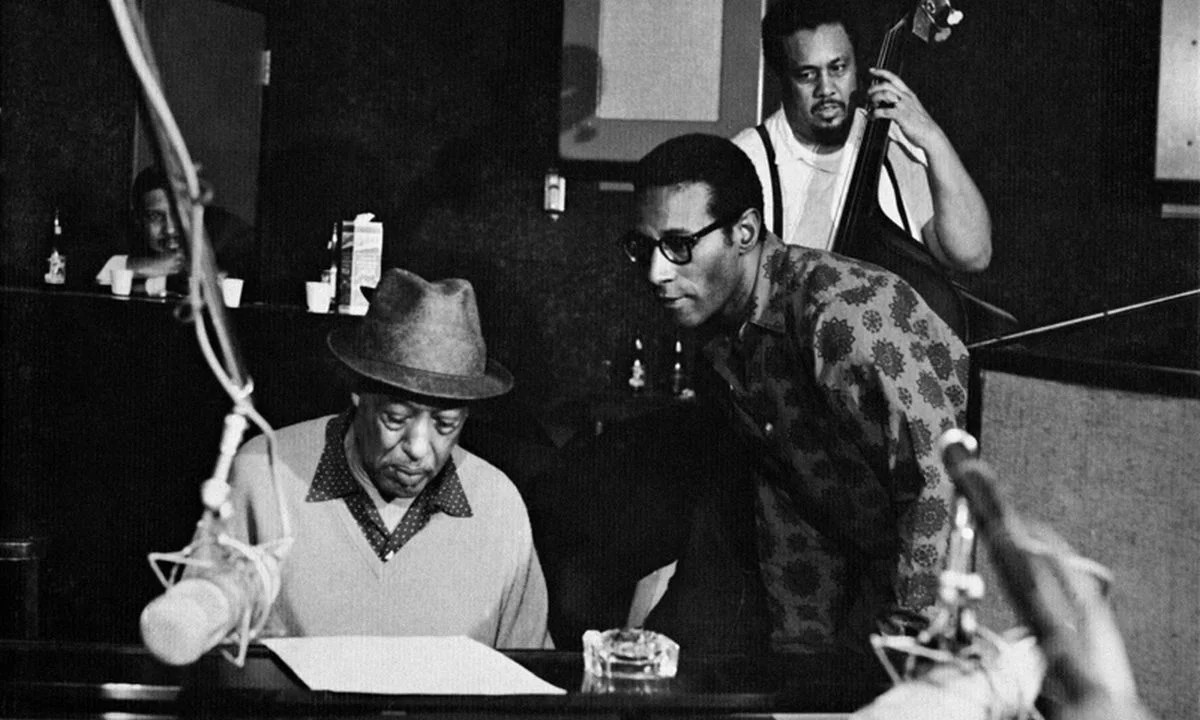
Photo credit: Miles Davis-Classical Album Sundays
Stay connected to KUVO’s programs and our community! Sign up for the Oasis E-News today!