Live & Local: Melody Epperson's "Dust to Apples: The Colors of the Eastern Plains"

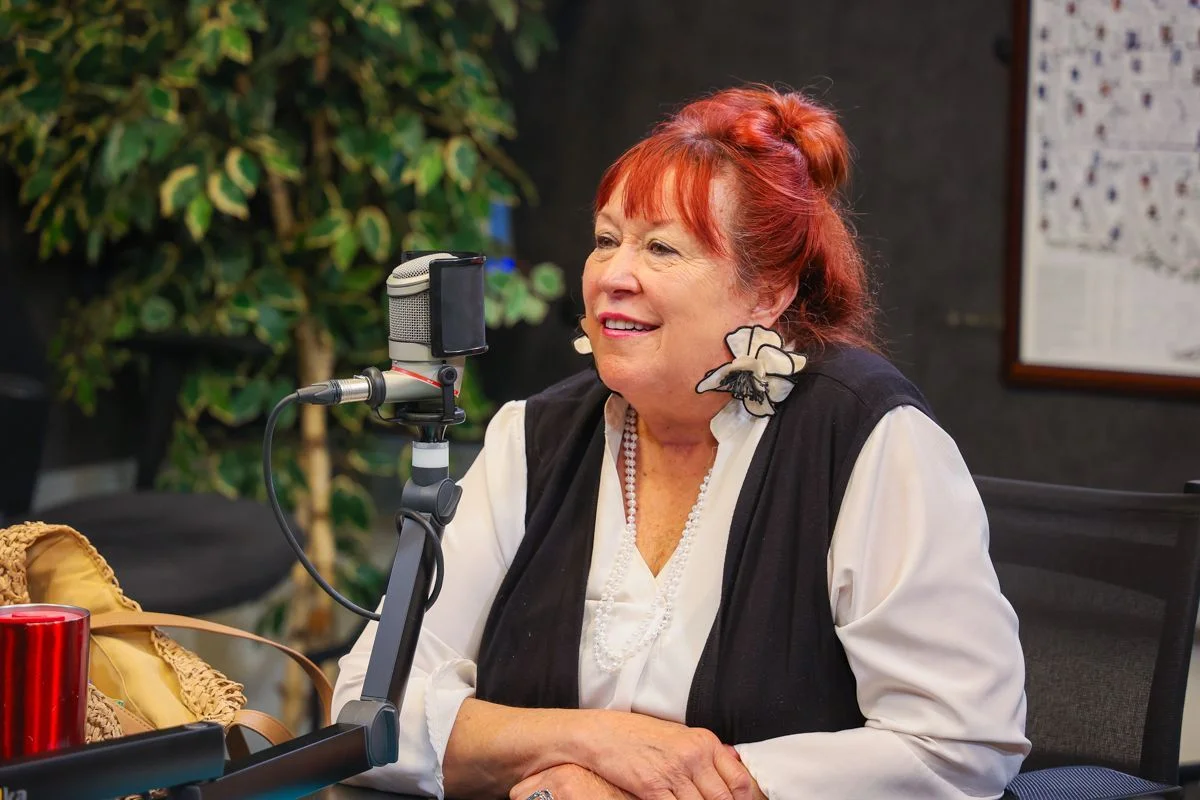
As the seasons change, we are truly reminded of the ancient power nature has. An ongoing community-based land art project brought me out into the field (literally) as I dug into Melody Epperson's "Dust to Apples: The Colors of the Eastern Plains," a collaboration with Adams County Parks, Open Space, and Cultural Arts Department. She says the project has three areas of focus: "my story, our collective disconnection and dysfunction with the land, and the healing that can happen when we reconnect with it."
Over the past two growing seasons, multi-disciplinary artist Melody Epperson has been visiting farms across Adams County. She was welcomed by farmers at Berry Patch Farms, Flying B Bar Ranch, Red Daisy Farm, Sakata Farms, and LaZy B Acres Alpaca, among others. Melody started her journey from the ground up, learning how to forage the best (and safest) plants for the most potent pigments. After studying the century-old art of ink making from the Dyer's World, she dove in headfirst, embracing the trial and error, equipped with her plant identification app, a pair of shears, a bag, and a small notebook.
Along the way, she learned about the history of the farms and the personal story of the farmers who work the land while navigating our current agricultural and climate challenges. These notes, along with her foliage findings, were jotted down and reflected upon in an ongoing blog on her website. Outside of the art, it closely resembles a research project as she’s read books on ink-making, the creative process, and the Dustbowl in an effort to better understand her own roots.
This call to nature harkens back to her own family story. Melody Epperson's great-grandparents were both Colorado homesteaders and farmers and her mother's parents, Florence and Leslie Hill, traversed the state from Springfield, Colorado to Guffey, Colorado, in a covered wagon to escape the effects of the Dust Bowl in search of more fertile ground. Here is an excerpt from Florence Hill's written story:
We looked back on the land, once covered by beautiful fields of golden wheat. They were gone, and only a vast wasteland lay to the mercy of the winds. Always shifting to and fro as though playing hide and seek. Always searching for a place to rest next to a farmhouse, a shed, a barn, or even a tree or weed. The garden, always so important, was hidden under dust. The tractors and machinery were useless and lay half-exposed. Dry weather had started this disaster, but also, farmers had not farmed properly.
Melody was kind enough to also share recorded conversations from the 1970s when her grandmother and grandfather were interviewed by her family, all gathered in their living room, on how it was back then: what it was like to harvest a whole pig, the normalcy of canning fruits and vegetables, and how the landscape (and life) changed with the shifting dust. Eventually, Melody’s family shifted away from agriculture, and now, after 3 generations, Melody returns to the dirt to reclaim this understanding of the earth, but this time, in her own way.
From the farm to the studio, her plant clippings are heated and steeped into inks, which she then paints with. In her blog, she reflects on her process, noting that Ink is alive. This series of abstract paintings called "Time Lapse" will embrace the passage of time as these organic inks will naturally fade, something she said captures "the wisdom of seasons and soil, the traditions passed down through families—so much of which has faded with industrialization."
After a series of community events over the past 2 years inviting others to experiment with the inks and learn about the art of their creation (the next one being at the 13th Annual Harvest Festival at the Barr Lake State Park on October 4), her paintings along with select artifacts from her own family archive and photos of this journey taken by documentary photographer Jimena Peck will be displayed December through March at The Gallery at Taza Coffeehouse, located inside the Adams County government center in Brighton.
RMPBS journalist Cormac McCrimmon joined me on visits to the Berry Patch Farm as well as Melody's home and studio as she gave us a firsthand look into her loving process, research project, and reflective art that she hopes invites others to reimagine their relationship and connection with the land.
Check out the story Cormac produced on RMPBS too!
Stay connected to KUVO’s programs and our community! Sign up for the Oasis E-News today!