Live and Local: Oscar Hernández

Spanish Harlem Orchestra, the three-time Grammy® winning Salsa and Latin Jazz band, sets the gold standard for excellence in authentic, New York style, hard-core salsa. Now celebrating 25 years of excellence, SHO, as they are known to fans, is dedicated to the sounds of the barrio (Spanish Harlem, NYC). Their music is characterized by the raw, organic, and vintage sound defined by the genre. They are on a mission to keep the musical legacy of salsa dura (hard salsa) alive and expand its audience to those who love great music, not just Latin music. Grounded in the past, while focused on the future, they strive to keep the music relevant creating a unique and fresh approach. Back to KUVO’s Live at the Vineyards by popular demand!
The SHO’s bandleader Oscar Hernández is a 4X Grammy Award Winner, long been considered one of the most gifted and prominent pianist/ arrangers on the contemporary Latin, Latin-jazz and salsa music scene. He has achieved legendary status for his prolific career spanning now over 40 years, beginning in the 70’s performing and recording with such seminal artists as Ismael Miranda, Ray Barreto, Celia Cruz, Conjunto Libre, Pete “El Conde” Rodriguez & Grupo Folklorico. Along with leading the SHO, Hernández is increasingly in demand as a pianist, arranger and producer, producing artists like Ruben Blades, Paul Simon, Willie Colón "Carabali", Daniel Ponce, Rafael Dejesus, Eddie Torres, Phil Hernandez, Steve Kroon, and Juan Luis Guerra, among others.
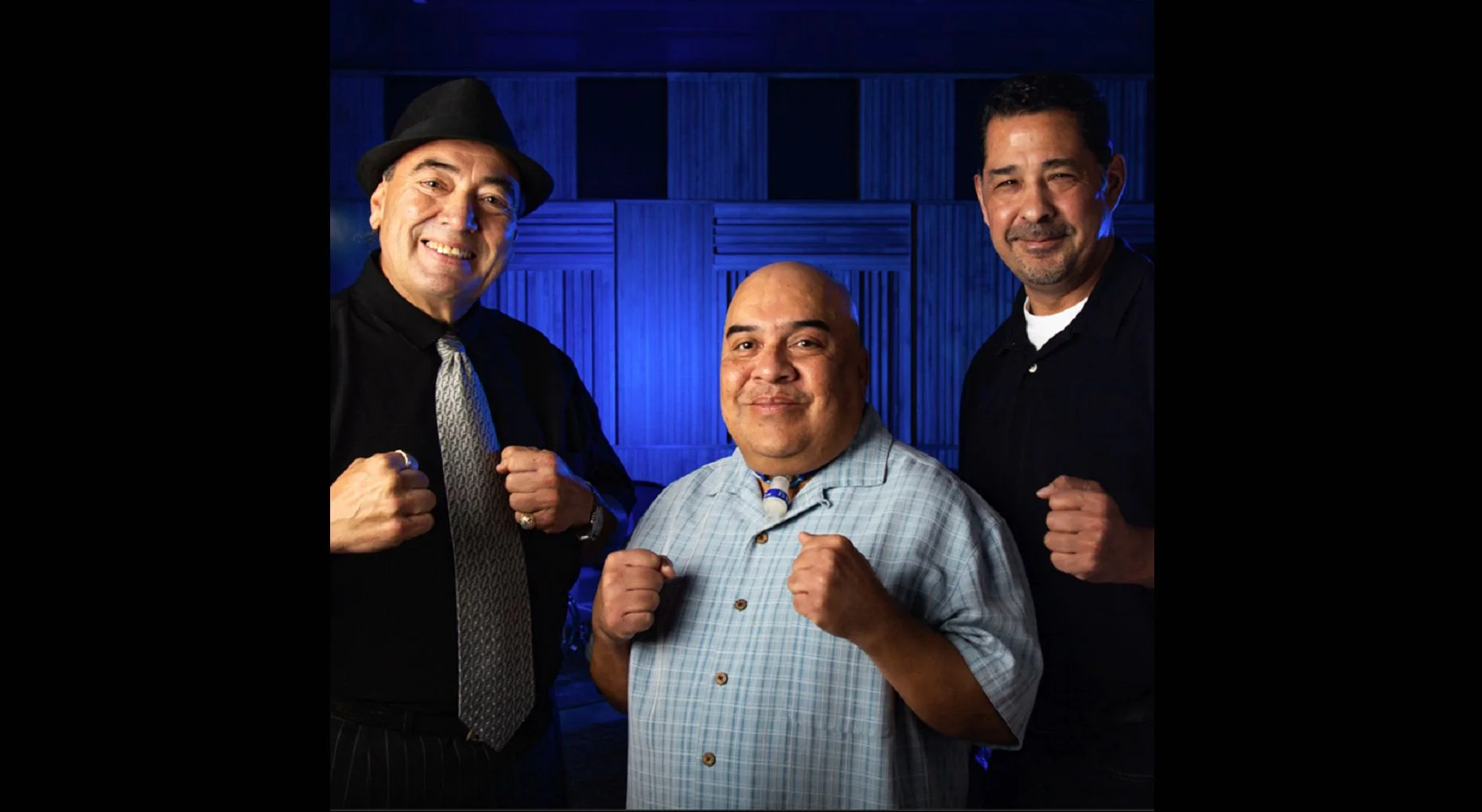
The Morning Set’s Carlos Lando and Steve Chavis caught up with Oscar Hernández in anticipation of the Spanish Harlem Orchestra’s return to Live at the Vineyards. They talked about the band’s 25-year legacy, the role of a sonero in front of a Latin jazz orchestra, and the rich salsa dura story, past and present.
Transcript
CARLOS: Oscar, we're so honored and happy that you've taken some time out to join us this morning. Abi Clark in the studio, our producer and co-host, and my man on the left here is Steve Chavis, who is a co-host as well. And of course, we've known each other for a few years. And I'm Carlos.
I want to start off with, first of all, congratulating you on the most recent recording, Swing Forever. And by the way, fantastic album cover. Everybody's having a good time. It's right out of West Side Story, but like 10 times more people, right on the street! You guys are getting close to 25 years now. 25 years. Who would've thunk it to keep an orchestra like this so dynamic together. You've always done a great job in coming up with new stuff, new arrangements, new songs, but then at the same time grabbing some of those old classics and putting your stamp on it, man. So, how do you do that? I mean, how does this thing just keep going, man?
OSCAR: Well, first of all, thank you guys at KUVO. Thank you, Abi and Steve and Carlos. I'll start by making an analogy. You've been with KUVO for how many years, Carlos?
CARLOS: Over 38.
OSCAR: So, you're asking me what does it take? I'll answer your question by what I feel that you already know. It takes passion, and I'm passionate about what I do. I'm passionate and it takes gratitude. So, passion for me is doing something that I've been doing since I was a young kid, which is playing music. Growing up in the city of New York and starting off with kiddy bands when I was 14 and 15 years old and 16, 17 and graduating to professional bands at 17, 18 and (in) my twenties.
And now having an amazing career 50 years later, having played with all the great people that I've got to play with, it’s just a reflection of that all those years at working at my craft with all the best people — even some of the worst people, I hate to say, because that's part of it too. You learn from everybody. And I'm very clear on my mission as far as what I've been brought into this world to do. I love it so much, and I love representing the best of my culture through what I do, which is music, and I don't take it lightly. I'm very fierce about it. I'm very clear, and I feel more than anything, gratitude to have a career that I could say I haven't worked a day in my life, and I've traveled all over the world.
So, a kid from the South Bronx, from the hood, recognizes clearly what a blessing that music has been in my life, and it's what drives me now 24 years with Spanish Harlem Orchestra to keep being the best at what I do and keep representing all those people that I got to play with who are no longer here, from Puente to Machito to Celia to Barretto, on and on and on.. There's so many people who keep passing away nowadays. When you get our age, those things happen. But I'm clear on my mission, brother. Aquí estamos!
CARLOS: Well, I have to tell you, after 24, 25 years, obviously, you feel great for the reasons just described and the accolades just keep on rolling in for the Spanish Harlem Orchestra. The New York Times: “The best thing at Newport Jazz Festival was the Spanish Harlem Orchestra.” The LA Times: “They make you get up and dance, tap into the good-natured communal spirit characteristic of salsa at its timeless best.” And my favorite, “Spanish Harlem Orchestra will be a bounty for both wallflowers” — that's usually me — “and hip shakers,” from Time Out New York: Top Live Shows.
To me, it's like the band delivers every single time. It's like you're the batting champion for every season, man. You guys don't ever strike out. So, congratulations for that. I wanted to roll into something about what distinguishes groups like the Spanish Harlem Orchestra that are very traditional in a lot of ways. You've got three excellent vocalists, and you also work time to time with other standouts, whether it's in the studio recording as you most recently did with Swing Forever. And you had Gilberto Santa Rosa, and you're coming out to Denver with one of my all-time favorites, and that would be Herman Olivera, who's a great sonero.
I get asked this question every once in a while, Steve was one of the ones who asked me, He goes, “What's the difference between sonero and a vocalist who's maybe fronting an orchestra?” I mean, what is the real characteristics that make up a good sonero?
OSCAR: Well, I mean, Herman certainly represents that. And we go back all those years. He goes back to me — we started together with Conjunto Libre. Don't forget, I was a founding member of Conjunto Libre. And so, I think to answer that question, you're talking about people, musicians, who have been steeped in the tradition of what this music was back in the day where a lot of musicians had their finger on the pulse of what the essence of the music was, which is clearly dance music.
But on the level that we do it with Spanish Harlem Orchestra, I like to think that it's a lot more than just dance music. Which it is. It is dance music, and I understand that, and people want to dance, and they’re moved to dance. But in terms of a sonero, to answer your question: somebody who comes from knowing what Ismael Rivera, what Cheo Feliciano, what, you know — even the Cuban singers, Miguelito Cuní, Benny Moré — what those musicians who were part of the evolution of this music in terms of where the music came from and how it evolved, those guys are clear on what that is.
It's like being a jazz musician and not being clear on who Charlie Parker is or Dizzy Gillespie — and I could mention a thousand other great musicians — but I think we're clear on the evolution of the music, the pulse of the music, what makes it swing, influenced by all those great musicians who came before us, who set a precedent in terms of what the swing of this music is.
And for me, with Spanish Harlem Orchestra, I think that there was a time in the eighties and nineties where people forgot what the essence of this music was. And for me, I'm not doing anything different than I did back with Ray Barretto and Rican/Struction,1976. I'm doing the same thing — “Rhythm of Life” or “Fuerza Gigante,” Those bands with Ray — go listen to those records. They could remind you of Spanish Harlem Orchestra.
Obviously, we're doing it today with different songs, different singles, different interpretations, but the essence of what that music is, it comes from that. And I'm clear on not trying to reinvent the wheel because it's the music I grew up, and I live and breathe that music, and I love it so much from that perspective. Back in those days, Carlos, I think you and I probably are similar in age, people lived to dance. Dance has become a sport now, back in those days in New York City, it was just communicating with a partner on the dance floor and being able to express yourself within what the essence of (what) the band was playing and the essence of the swing that the music came from. It wasn't about, “Hey, check out my moves, check how many flips I could do.”
And so, that's kind of a little bit lost. And just like what I'm saying with the music is a little lost, but not with Spanish Harlem Orchestra. We're clear on what that mission is, and I'm proud to keep doing it and keep representing it because I'm true to that. I am true to that, brother. And it's evident on every record. I could go to every — I don't go back and listen to the stuff we've done, but whenever I have the opportunity to listen to whether somebody's playing it or I hear it when I walk in someplace, it brings a smile to my face because it came from a really deep sense of passion and love. When I left that studio, I loved everything that we did. You know what I mean? Trying the best that we could to make great music in terms of what the essence of this music is about.
STEVE: Oscar, a very pedestrian question. As someone who's come to the music late — not part of my tradition but being here at KUVO — I've certainly learned a lot, heard a lot. One of the things about the salsa sound is the way the horns punctuate. It's part of the story, but then it always surprises you at the end, and you're not sure if they're done peppering the end with a really strong statement. Is there a particular strategy or anything? What's going on in the ways you bring these songs to such a sensational finish?
OSCAR: Well, great question, Steve. There are no pedestrian questions. You know what I mean? It's all about learning and wanting to learn. So, I think speaking of…again, I'll say it again — it's always going to be part of what I say — speaking up to the essence of what this music is in terms of swing, You could go back in a jazz analogy. Talk about Count Basie, right? In the jazz tradition, Duke Ellington. What made those bands so unique besides the beauty of the compositions, the artistic value of the compositions, was the swing!
And the same thing with jazz. Prior to becoming a cerebral music, it was dance and the swing of the music. And people who know the idiom or the genre know when the drummer is laying it down, when the bass player is laying it down, and they're part of a team. So, the essence, to your question, goes back to what the swing of this music is. I mentioned the eighties and the nineties because people kind of forgot what that was. It became about a singer who stood up on stage and told a story, and the arrangements were very, very bland, very, very mediocre, to put it honestly. And they lost the essence of what the swing was. They gained in certain commercial popularity (by) speaking to some people in terms of songs that they could relate to in terms of the lyrics and stuff like that, but the essence of the swing kind of became lost.
So, I think that when you look at a band that does what you're talking about, Steve, it's conscious of, “How can we make this song swinging in every aspect, not only for the dancers, but in terms of the artistic value of the song?” It has some essence of what the history is. So, when I think of the great arrangers of Latin music, whether it be Gil López, René Hernandez, Marty Sheller — and there's so many. Eddie Martinez, that I learned from as a young arranger, those songs contain the essence of what that is!
And it's hard to explain, but musicians in the know kind of would go like, “Yeah, yeah.” And dancers don't know why, but they're going, “Yeah,” on the dance floor. And with Spanish Harlem Orchestra, guys, I think that the biggest compliment I get is — although people complain, because we play a lot of performing arts centers where people, you're not supposed to dance, right? And I say, “Look, I understand, but enjoy it from a listening perspective. Enjoy the arrangements in terms of the five-piece horn section responding to the singers, the three singers responding to the piano, the piano responding to the bass, the bass to the rhythm, to the percussion section..” There's a lot to enjoy from an artistic standpoint. And of course, at the end, everybody wants to get up and dance because it's steeped in the tradition of what swing is with regard to this music. So, I take a lot of pride in having grown up in that, what that was.
When we go back to Eddie Palmieri, listen to the “Azúcar,” the track. And, just to use somebody as an artist, I mean, I could go back to Dance Mania and Tito Puente. I could go to Tito Rodríguez, I could go to Machito, The Big 3 NYC. I use, for instance, “Azúcar Pa' ti,” Palmieri, in clinics across universities. I just sit there, and I play and I explain what's going on, and the musicians go like, “Wow.” They can feel (it), it's palpable. They can feel the swing. Especially when somebody's explaining it to them in terms of how it's developed, how it's cooked, how that stew is cooking in terms of everybody being a team player to make it swing, to make the dancers get lost in the revelry of what dance is at its best.
So, I don't know if I'm explaining my it correctly, but I love this music, man.
CARLOS: Hey, Oscar, you just answered two questions, which was beautiful. I don't have to ask you the last one. I could just make it a quote. Many years ago, Eddie Palmeri told me, “Look, doesn't matter what I do musically or where I go or whatever,” he goes, “the essence of everything I do is steeped in the dance. You know, without that, I got nothing.”
That is the essence of why this music can reach so many people, and it's so exciting that you're going to lock into something that's going to make you move. And that's just the reality.
OSCAR: Yeah, and no doubt! I mean, when you think of the essence of the conga, it goes back to Africa and the dance — and obviously it developed different in Cuba. It went on to influence Puerto Rico and New York. I say New York because I’m from New York, and what happened in New York in the sixties, seventies was hardcore, man. It doesn't get better than that!
There was so much music that was being produced. It's like Motown in Detroit. There was so much music that was being produced by so many great artists that it became undeniable what that was in terms of R&B, in terms of black music. Well, same thing in terms of Latin music! So, I'm New York hardcore. I'll always be New York hardcore. Yo soy Latino. I speak Spanish, I'm proud of it. But for me, the essence of who Oscar Hernández is, is steeped in New York City, sixties — early sixties — seventies. You know, the music that influenced my life, I would see my older brothers — cause I’m the youngest of 11 — I would see my older brothers and sisters getting ready to go party on the weekend when I was 12 years old, getting dressed and listening to that music. And then when I saw it in person live, I went like, “Whoa.” And then somebody happened to give me a piano, it was all over!
So, here I am now all these years later, just blessed and happy to be doing it. And I have a lot of love for the music on all levels because there's an artistic aspect that I like to think that we're about. I don't know if you're aware, Carlos and Abi and Steve, Spanish Harlem Orchestra just signed the contract to do three concerts with the New York Philharmonic and Gustavo Dudamel. So, I'm amazed that we're gonna get an opportunity like that to put our music on the pedestal it merits to be on.
CARLOS: Wow. Well, with that, man, we're going to leave it right there, Oscar.
OSCAR: Well, the last thing I say, look, I would be remiss if I didn't say thank you to KUVO and the work that you guys do with disseminating this music and educating and making people aware that there's music beyond the commercial, mediocre BS that they're fed on commercial radio. So, thank God for people such as KUVO and what you guys do that are often the lifeblood of what we do as musicians! So, I'm happy to be part of the event this year at the Balistreri Vineyards. Again, we’re there, and I'm honored to be part of that, and we could bring our passions of what music is together and make it happen on that level.
Catch “Live & Local” every Tuesday & Thursday on KUVO. Tune in to KUVO JAZZ 89.3 FM in Denver and listen to The Morning Set, weekdays from 7 – 10 a.m. MT. You can also stream online here at kuvo.org or listen to the KUVO App.
Stay connected to KUVO’s programs and our community! Sign up for the Oasis E-News today!
Stay connected to KUVO’s programs and our community! Sign up for the Oasis E-News today!