The O'Zone | Astral Travels in the New Land: Spiritual Jazz & Black Culture

The Collective Dream
A saxophone breathes fire, then gold.
A Sun Ra dream, ancient and bold,
Stretching past the stars where the mothership flies
To catch echoes of ancestors’ cries.
It is the Coltrane hum,” A Love Supreme”
woven through the fabric of a collective dream,
Where Alice’s harp finds a celestial key,
That unlocks the spirit and sets the captive free.
From Pharoah’s horn to the Leon Thomas wail,
The music is the wind in a righteous sail
A Blacknuss deep as the velvet night
Turns every sorrow into a blinding light.
It’s the pulse of the Nile in an urban street
The rhythms of the heart where these heavens meet
Not just a sound but a holy vibration
The rising souls of a mighty nation
Spirits Rising
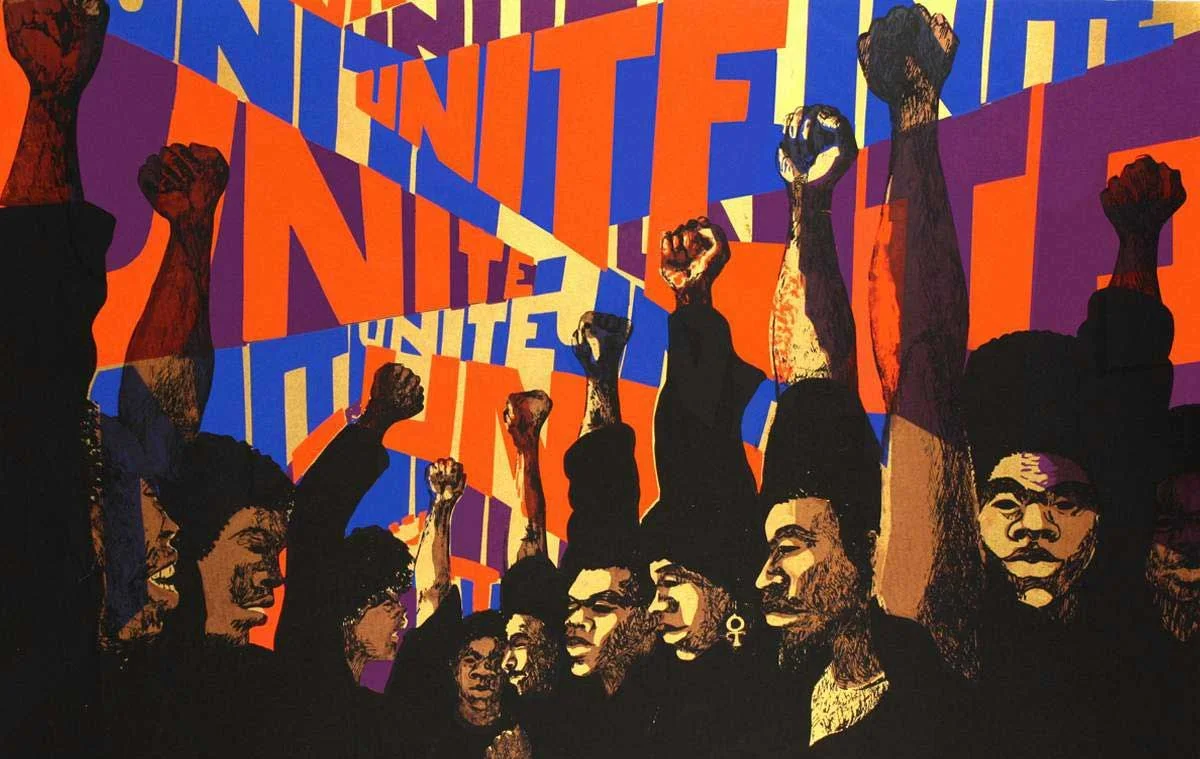
Call it a subgenre…Spiritual jazz emerged in the 1960s, blending the technical innovations of modal and free jazz with a deep focus on transcendence, meditation, and social consciousness. Serving as a bridge between musical expression and a higher spiritual plane, the music often incorporates non-Western instruments and philosophies. It was deeply intertwined with Black Liberation and the Civil Rights movement, and it provided a platform for Black artists to reject systemic racism and European musical standards by embracing African heritage and self-determination. Funky serenity!
Arkestra Rising
Herman Poole Blount fell from Saturn,
shedding a name like an old skin
To Become the Sun himself
He wore robes of stardust
And crowns of copper
He led the Arkestra through the spaceways
Where the tempo is a cosmic equation
And the melody is a better day
No gravity in his jazz
Just the hiss of synthesizes
and the low thrum of a rocket ship
He didn’t just play the keys
Instead he signaled galaxies
that Earth was finally ready to wake up
He was the first angel of the future
proving that if the world is doomed
You can always build a kingdom
In the sound between the stars.
The Vision Monster Breaks It Down!
A Love Supreme by John Coltrane is pretty much acknowledged (pun intended) as the first definitive spiritual jazz album. It was recorded in December 1964 as a deeply devotional offering to God. Although there were earlier works hinted at by artists like Yusef Lateef, Coltrane’s four-part suite established the genre’s focus on meditation, transcendence, and religious expression.
December 9th was a cloudy, cold day, hovering just above freezing, a stark contrast with the reverential glow in Van Gelder Studios. The lights were dimmed (probably Rudy Van Gelder’s idea, as he was in charge of such things at his studio). The first movement culminates with an unprecedented verbal chant by Coltrane that forms the foundation of the entire suite. By the time of this recording the “classic Coltrane Quartet” was one of the most cohesive units in jazz history and the depth of the music showcases it.
There were those who just didn’t get it. Within the Black community, it was embraced as a symbol of pride and communal nerve. DownBeat gave it a rare 5-star review. The critics and readers of the magazine voted it Album of the Year and voted Coltrane Jazzman of the Year in the 1965 Readers' Poll.
Ultimately, Coltrane achieved the triple crown: Top Tenor Saxophonist, Top Jazzman, and induction into the DownBeat Hall of Fame.
A Love Supreme sold 500,000 albums by 1970 and was nominated for 2 Grammy awards, although the Samba inflections of Stan Getz and Astrud Gilberto took those awards ... not bad for an avant-garde record.
After The Trane Has Gone - Alice Coltrane and Pharoah Sanders
The funeral of John Coltrane was held at St. Peter’s Lutheran Church in New York City with performances by the Albert Ayler Quartet and the Ornette Coleman Quartet. In one of the most singularly unique tributes in music history, Trane was canonized by the African Orthodox Church as Saint John William Coltrane with a dedicated church in San Francisco that uses his music as liturgy. His wife, Alice Coltrane, managed his rather extensive archives, releasing several albums through Impulse! Records.
Notably, she added orchestral and harp arrangements to some of his final recordings, such as on the album Infinity (1972).
Alice Coltrane and Pharaoh Sanders were pivotal figures in the spiritual jazz movement, known for their musical and spiritual partnership after the death of John Coltrane. Both were members of Trane’s final quintet. Sanders was known as a disciple of John Coltrane’s sheets of sound style, but on his records with Alice Coltrane, he showcased a more meditative approach to his sound. Two influential collaborations became cornerstones of the advancement of this music.
Ptah, the El Daoud (1970) and Journey in Satchidinanda (1971), both released on Impulse!, are each seen as a continuation of Trane’s legacy.
Disciples or Successors?
On a personal level, especially to family, friends, fans, and collaborators, when someone like Trane passes, expressions like “irreplaceable” or “there’s a hole left in the music” are very pertinent. However, in the case of John Coltrane, those who followed in his large footsteps were legion:
McCoy Tyner, Leon Thomas, Azar Lawrence, David Murray, David S. Ware, Archie Shepp, Charles Lloyd, Rahsaan Roland Kirk, John McLaughlin, Carlos Santana, Joe Bonner, Michael Brecker, Wayne Shorter, Greg Osby, Courtney Pine, Kenny Garrett, Kamasi Washington, Zoh Amba & Isaiah Collier, Matthew Halsall & Nat Birchall, Makaya McRaven & Angel Bat Dawid, Lakecia Benjamin, Shabaka Hutchings & Sons of Kemet, and Ravi Coltrane (who honors his Father’s legacy while maintaining a separate individual musical identity).
An aside: sax has split into four basic branches since its rise to prominence. Spiritual jazz, soul jazz, bebop, and mainstream. I suggest avant-garde and fusion could find themselves straddling these forms (another blog there?). There were (and still are) many who are spiritual jazz disciples. Not unlike bebop, spiritual jazz has continued following the passing of the figurehead of the music, flourishing in the aftermath.
Aftermath
A saxophone breath stretches,
no longer bound by the smoke of basement clubs,
but humming in the slipstream of a satellite.
The Ancestral hum of Coltrane
fractures into digital light,
a prayer encoded in the pulse of a new star.
The “Om” is now a frequency
vibrating through synthetic skin,
finding marrow in the machine,
insisting that the spirit
cannot be outrun by the clock.
It grows
not in a straight line,
but as a spiral of light,
leaping across the silence of the void
to find the next ear
waiting to be unsealed.
Stay connected to KUVO’s programs and our community! Sign up for the Oasis E-News today!