The O’Zone | MILES100 Part 2: Miles Ago

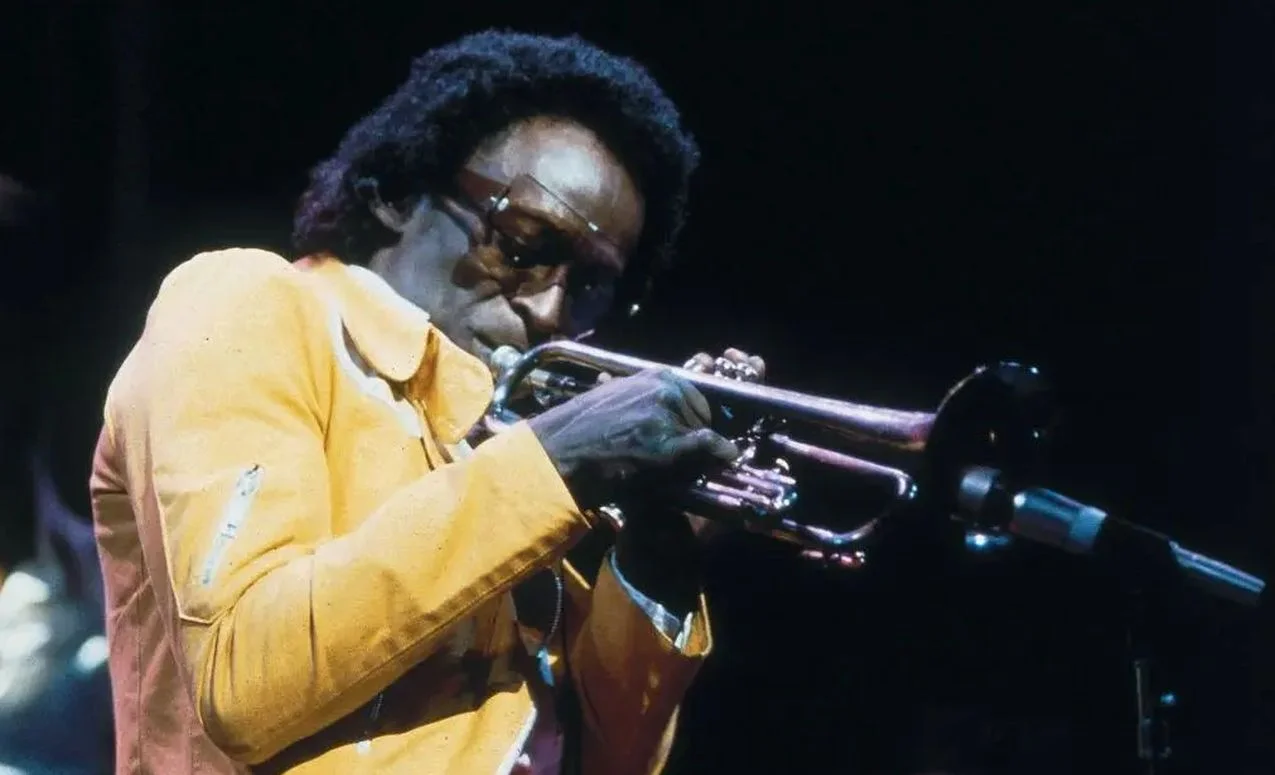
Last week, I wrote about how I found Miles Davis. My journey started in conjunction with his music after he plugged in.
I didn’t have a history of Miles from bebop; my discoveries were electric, so I didn’t understand the criticism of his move to funky electric music. I knew the name but not the music, so hearing him with what many called “a rock band” is what it took for a guy like me to start rolling back on his history.
At the time, I heard a lot of disparaging comments about how he “sold out”. Miles was pretty smart with his money, so his “selling out” wasn’t about currency so much as it was about relevancy.
Used record store crates led to many a discovery: I noticed his album Miles Smiles, featuring a band full of musicians I knew about. Wayne Shorter, I knew about from Bitches Brew but more from his association with Weather Report. I knew of Herbie Hancock from his adventures before The Headhunters, Tony Williams from Tony Williams Lifetime with John McLaughlin, and then I had tons of CTI albums with the venerable Ron Carter. So there it was, my first Miles Davis album that was “straight ahead jazz”.
Considering what I knew at the time, I called it capital-J jazz, and one of the first songs I learned from the album was Footprints. After encountering Freedom Jazz Dance, I was hooked, exclaiming, ‘OK THEN! I’ll buy it!’
Time, No Changes: The Switchblade Band
They called this band “The Second Great Quintet”.
Fair enough, but I was listening to them first in my Miles education journey, probably not unlike most Beatles-Boomers discovering the pre-Bitches Brew Miles.
They picked up the nickname "The Switchblade Band” from poet and critic Amiri Baraka from his famous description of this group as the “all-time classical hydrogen bomb and switchblade band.”
Baraka utilized this imagery to emphasize the social and musical sharp edge of the group. Comparisons to Miles’ previous groups were inevitable, but descriptive adjectives for this band keep resurfacing.
Here we go…precision, speed, unpredictability, volatility, beauty, moodiness…You get the idea. These young men operated within a concept Miles called “time, no changes,” which allowed this virtuoso rhythm section to aggressively and fluidly respond to soloists rather than working rigid patterns. Let’s not forget that Miles had a band full of amazing jazz composers. Miles had a particular fondness for Wayne Shorter’s music and would frequently urge him on the phone or between sessions to “bring the book!” referencing Wayne Shorter's composition notebook.
Miles was also a fan of his pianist Herbie Hancock and recorded these compositions as well.
Key Milestones
Formation (1963-1964): Miles spent 1963 seeking out young talent for what became known as his Second Great Quintet. His first choice was foundational (pianist Herbie Hancock), followed by Ron Carter on bass and a surprise to many: then-17-year-old prodigy Tony Williams on the drum kit. Miles made no secret that he wanted to hire Wayne Shorter, who at the time was in a five-year agreement with the Jazz Messengers. The transfer was amicable, and Wayne joined in 1964, solidifying the “classic” Second Great Quintet lineup.
Studio Debut & Plugged Nickel Sessions (1965): The group recorded their debut, E.S.P., in Hollywood.
It was Miles' first record since Kind of Blue in 1959 to feature original material written exclusively by band members. In December, during a live engagement at The Plugged Nickel in Chicago, the group reached a breakthrough in their performance style. Pushing improvisations to extreme levels of abstraction and unpredictability became a permanent feature of their sound, and if you will excuse the expression, caught lightning in a bottle as these sessions were recorded.
Pinnacle of Post Bop (1966-1967)
The quintet recorded a string of landmark albums–Miles Smiles (1966) established the band’s identity, while Sorcerer (1967) continued their move toward abstract, non-chordal improvisation. Nefertiti (1968) is famous for the title track featuring horns that repeat the form again and again while the rhythm section improvises wildly. It’s also the last all-acoustic album by the band.
Electric Transition & Breakup (1968)
Miles in the Sky (1968) introduced electric instruments, electric bass, electric guitar, and Fender Rhodes piano.
During the sessions for their final studio collaboration, Filles de Kilimanjaro (1969), the lineup began to dissolve as Carter and Hancock were replaced by Chick Corea and Dave Holland. Filles serves as a breaking point between the post-bop and jazz-fusion era.
Switchblade at the Plugged Nickel
If I Were a Bell starts the night, inside the Plugged Nickel, a packed room waits.
The drummer isn’t old enough to drink here
but Tony is fire incarnate,
a whatever you expect I will play the other thing
kind of fire.
Miles has a new swagger,
his next quartet is dangerous and he knows it!
Herbie, his fingers like spiders on the ivory world
weaving suspended chords twisted into webs of tone.
Carter making all the right notes at the more right times
E.S.P. with Tony furious storms
with lightning where Miles lives
and Shorter is the swirling winds of change.
The audience came for the cool, predictable,
instead, they were met with a splintered mirror.
A frantic edge to the listening,
eyes wide, shoulders tight as they realize
the old maps have burned.
After those nights, the ink on the page
never dried the same.
The safety of the “one” was replaced by
a sliding scale of maybe.
Jazz stopped being a destination
and became the act of falling through space,
As always Miles leading the plunge,
knowing once you break the air like that,
you can never go back to the ground.
On Wells Street, the room was a gathering of shadows,
the light was the glow on the bell of Miles’ horn
and the sweat on Tony’s brow.
The Top Twenty Albums by Miles (in sales)
1. Kind of Blue (1959) - The undisputed king of jazz records. Its modal approach created a spacious, cool atmosphere that remains the entry point for millions of jazz fans. The biggest selling album in jazz history.
2. Bitches Brew (1970) - A certified platinum powerhouse that launched the jazz-fusion movement, blending Miles’ intense, sparse trumpet with rock rhythms and electric instruments.Perhaps the coolest album cover of all time by German painter Mati Klarwein.
3. Sketches of Spain (1960) - Another platinum-certified success, this collaboration with arranger Gil Evans is a lush, orchestral masterpiece which features an extended, jazz-fused arrangement of the second movement (Adagio) from composer Joaquin Rodrigo’s Concierto de Aranjuez.
4. Tutu (1986) - An 80s era standout collab with Marcus Miller that embraced synthesizers and programmed drums, winning Miles a Grammy and showed he could be “culturally relevent without sounding dated.” (Jazzwise)
5. Birth of the Cool (1957) - A collection of sessions from 1949-50, this album established the “cool jazz” sound and remains perennially cool. An all-star lineup of great players perhaps the best nonette ever.
6. Porgy and Bess (1959) - A beautiful adaptation of the Gershwin opera that highlighted Miles' lyrical abilities to interpret standard melodies with intense emotional depth.
7. In a Silent Way (1969) - Often considered the precursor to Bitches Brew. Its ambient, chill, atmospheric textures put it into a different vibe entirely. This is ice to Brew’s fire.
8. The Man with the Horn (1981) - “Don’t call it a comeback,” Miles warned, but it does mark his return after a hiatus of five years. The debut of guitar firebrand Mike Stern.
9. Milestones (1958) - Miles pivots from hard bop to modal jazz, features the iconic title track and a powerhouse sextet.
10. ‘Round About Midnight (1957) - His debut for Columbia and the First Great Quintet, and a legendary version of the Monk title track.
11. Miles Ahead (1957) - Miles plays flugelhorn accompanied by a 19-piece orchestra, showcasing a sophisticated, “chamber jazz” side of his work. Once again working with Gil Evans.
12. On the Corner (1972) - The haters came out in force when this came out. It’s funkier than they thought Miles ought to be.WRONG! Decades later, it’s a blueprint and design for what is now.
13. Workin’ (1959) - Part of a legendary series of four albums recorded in just two sessions to fulfill his contract with Prestige Records.
14. Relaxin’ (1958) - The intimate feel, a band at the height of their powers, How did they pull this off while the clock was relentlessly ticking?
15.Nefertiti (1968) - The final acoustic masterpiece from the Second Great Quintet, where all five men play with miraculous telepathy.
16. A Tribute to Jack Johnson (1971) - Leaner and meaner than Bitches Brew, Miles' best fusion album ever! Soundtrack for a documentary about a figure Miles truly admired. It plays like that.
17. Amandla (1989) - A late career gem and sort of a follow up to Tutu, although not as sparse. A dense mix of styles, jazz, funk, go-go, and zouk. A date filled with session musicians and Miles' only collab with George Duke.
18. Miles Smiles (1967) - A definitive record of the Switchblade Band of the 1960s. The writing, the playing, the solos, and the production are all top shelf! I recommend it as a starter if you haven’t found Kind of Blue.
19. Star People (1983) - Blues heavy from Miles comeback years, proof he hadn’t lost his grit or quiet fire.
20. Aura (1989) - Miles became the first jazz musician to receive Denmark’s Leonie Sonnig Music Prize. In honor of the occasion, Danish composer and trumpeter Palle Mikkelborg wrote this ambitious suite for Miles. It earned Miles a Grammy and could have changed jazz again, but for its five year delay by Columbia, which squashed the album because they wanted something more “radio friendly” and in doing so chased Miles from Columbia to Warner Bros.
“look. miles changed the world. more than once. that’s true you know…it will never be the same again now, after in a silent way and after BITCHES BREW. listen, how can it ever be the same?” — Ralph J. Gleason from liner notes of Bitches Brew
Stay connected to KUVO’s programs and our community! Sign up for the Oasis E-News today!