The O'Zone | MILES100 part 4: The Prestige

Shapeshifter:
East St. Louis in the late twenties
Mississippi bassline red clay river mud
Miles Dewey Davis III born into comfort
A dentist’s son thriving
even with the air of riot
sulfur and smoke and scars
on the town’s brick walls.
Young Miles finds the trumpet
his Mother didn’t want him to play
a gift from his father
taught to play without vibrato
“Keep it round, you”ll be old and shaking one day”
his teacher Mister Elwood Buchanan scolded
“Don’t shake that note son”
The birth of the signature clean, ice-cold tone
The boy with the horn was already a man.
New York City calling 1944
Julliard and 52nd street
Searching for Bird
Living in the whirlwind once he found him
Fast tempos, sharp turns and heavy drug habits.
BeBop revolution fast life
Miles carving out his own space in the din
space between the notes between the fixes
The Birth of the Cool
Nine men chilling a quiet revolution.
Bad news from home,
The anchors snapped in the late fifties,
The matriarch Cleota Davis passed first
Then the dentist, Miles Dewey Davis II
Gone Gone Gone
He bought the first horn
Funded the dream
Performed the rescue
Grief did not wear a black suit.
It wore a heavy suffocating silence.
Miles pushed deeper into the music to escape.
Kind of Blue became a modal funeral march.
Six compositions
Sketches to bury the past,
An entire genre shifted
because a man was mourning.
The Atlantic coast grew cold, restrictive.
The sixties bled into the seventies and now Miles was the Chief a mentor/father now
California offered a new light
The Malibu coast and Los Angeles studios
A fresh landscape to match a radical sound
Plugging trumpet into wah-wah pedals.
While purists cried “betrayal”
Miles didn’t look back
Chasing the funk
Diggin Jimi and Sly
Driving fast cars down the Pacific Coast Highway
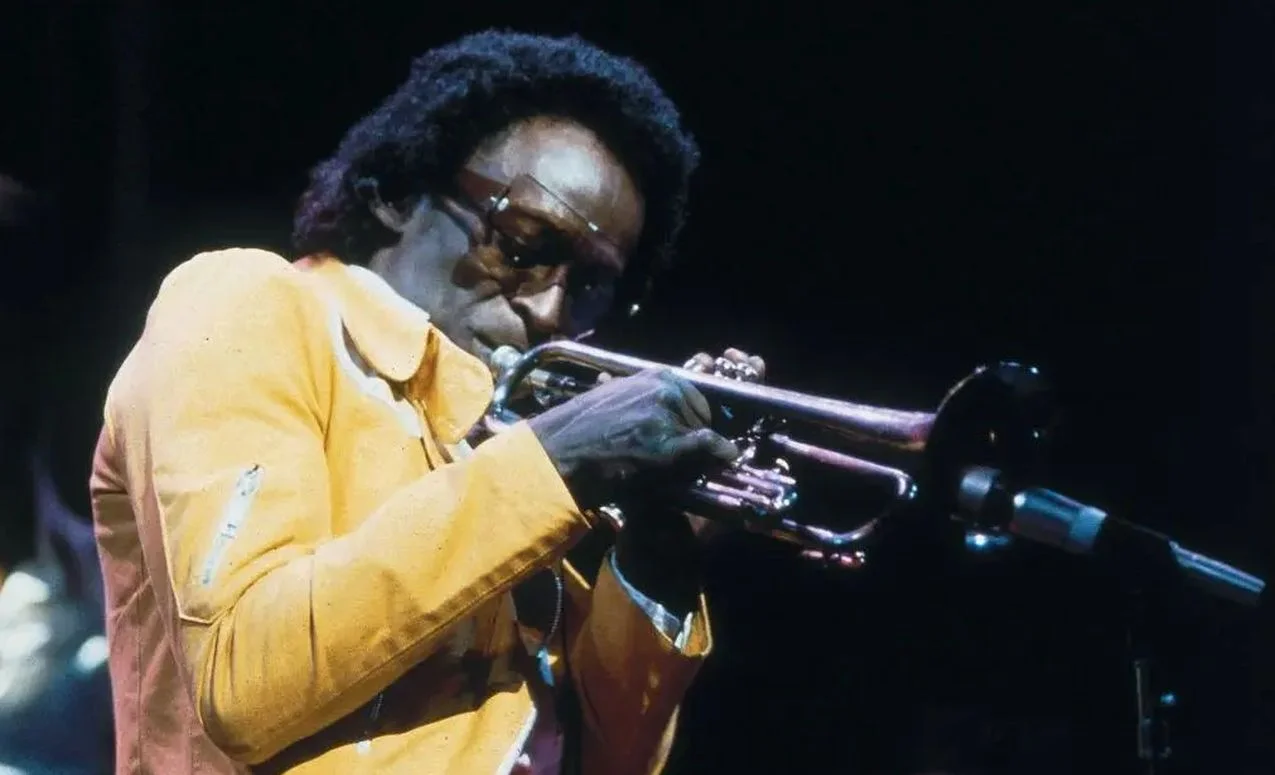
Clad in oversized glasses and leather
Reinventing his myth in the golden state sunshine
Shapeshifter with a horn
The Chief never settled never stopping
Always moving.
Kind Of Blue
How does an album become THE album?
First, it’s reasonable to assume that it needs to be great… Kind of Blue? That’s a given. The Quintet became a sextet with the addition of the bluesy fire of Cannonball Adderley. Also, Bill Evans returned after leaving, and after some simmering resentment. More about Bill, a bit later in this chapter.
Miles was already in a very prolific period, so he didn’t arrive unannounced. A decade full of his shapeshifting restlessness: from Bop to Cool, to Hard Bop to Orchestral, to the Quintet to Modal… what would be next? Word of mouth is huge, with stove-hot discussions about what Miles would do to change jazz yet again. Milestones, Davis’ album released just before Kind of Blue, had ventured into modal jazz with the title track. Fans were anxious to see what the new thing would be.
The album was recorded in just two sessions at Columbia’s 30th Street Studio in New York City.
Instead of giving his band fully written “charts”, Davis provided mere sketches of melodies and scale frameworks right before the tape rolled. Forcing his virtuoso saxophonists to rely entirely on raw improvisation, nearly every track was captured in a single, legendary first take. Miles utilized Trane and Cannonball in a yin and yang approach, powering the dynamics.
Coltrane leaned into modal exploration, fully embracing the concept with his “Sheets of Sound” intensity and searching questioning. His solo on “Flamenco Sketches” is a perfect example of his approach. Meanwhile, Cannonball Adderley brought a soulful, gospel, bluesy feel to the avant-garde sessions. While Coltrane was searching, Cannonball was celebrating. Adderley’s alto was lyrical, warm, lush, and accessible. His joyful solo on “So What” exemplifies the difference between the two saxophonists. The minimalist approach of the music, paired with wicked cool interplay, helped lead to the unparalleled popularity of the record.
Davis was looking to break free from the aggressive and fast style of Bebop, and in pianist Bill Evans, he found his solution. Evans' quiet introspection and deeply emotive style were a perfect kinship for Miles' similarly emotional style. There was tension between some members of the sextet and Bill, but Miles ignored it and pushed his vision, which absolutely worked.
The Monolith
Miles does not ask for perfection.
He asks for the first thought,
The unvarnished truth of the immediate air.
No charts on the stands,
just sketches and wrinkled brows,
modal fragments and crumbs of chords
left behind by a restless leader.
Bill touches ivory
evoking mist over an early morning lake.
Cannonball brings the warmth of the earth
John tears at the edges of the skies
While Paul and Jimmy lock into a heartbeat.
They do not know
they are carving a monolith.
They are playing for Miles; it's never ordinary.
Time is already bending around the room.
The sessions end, the cigarette smoke clears,
and the blue ink spills out into the world.
It becomes the color of late night streets,
A million lonely rooms,
the inevitable gravity of modern cool.
What began as a couple hours of drifting chords
hardens into the monument.
An eternal historic blue,
Stretching out forever into the jazz-lit dark.
“Hey man, have you heard
Kind of Blue?”
The Prestige Four
Don’t let the label name fool you, Prestige essentially operated as a predatory financial operation masked as a jazz label. Most of the artists who became ensnared in contracts with founder Bob Weinstock grew to resent both the label and Weinstock. Capitalizing on the devastating heroin epidemic sweeping through the New York jazz scene and realizing that many legendary musicians were desperate for quick cash to feed their addictions, Weinstock provided tiny cash advances in exchange for heavily restrictive, multi-album contracts that forced artists to relinquish 50% of their publishing rights to Prestige’s in-house publishing arm, pocketing a huge portion of the musicians’ songwriting royalties.
Factor in exploitative pay, low royalties, refusal to pay artists for rehearsal time, cheap production, insisting on single takes, releasing unedited takes with false starts or studio chatter to avoid paying extra studio time, the whole deal was (feel free to insert your choice of expletives about this here. I had PLENTY).
Following Miles’ show stopping legendary performance at the 1955 Newport Jazz Festival, Columbia Records executive George Avakian was desperate to sign him. Recognizing Miles’ star potential, Avakian offered a lucrative contract with a $4,000 advance (a small fortune for a Black jazz musician at the time), but because Miles still owed Prestige four more albums, Avakian negotiated a highly unusual legal compromise with Bob Weinstock.
A Dual-Label Clause: Miles was legally permitted to sign with Columbia immediately and begin recording master tracks in their high end studios.
The Release Embargo: Columbia agreed to lock Miles’ new recordings in their vaults and promised not to release any Columbia material until Miles completely fulfilled his obligations with Prestige. To escape the embargo and get his Columbia albums to market, Miles decided to clear his backlog with Prestige as quickly as possible. Instead of writing new music, Miles took his First Great Quintet (John Coltrane, Red Garland, Paul Chambers, and Philly Joe Jones) and booked into Rudy Van Gelder’s studio for two sessions and treated their time there like a live nightclub gig, running through their standard setlist with almost no second takes.
They knocked out 25 tracks, which became: Cookin’, Relaxin’, Workin’, and Steamin’. The irony is that they rushed these sessions to escape from Prestige and wound up capturing the quintet at their absolute raw, improvisational peak, creating some of the most influential jazz albums in history.
Two Quintets
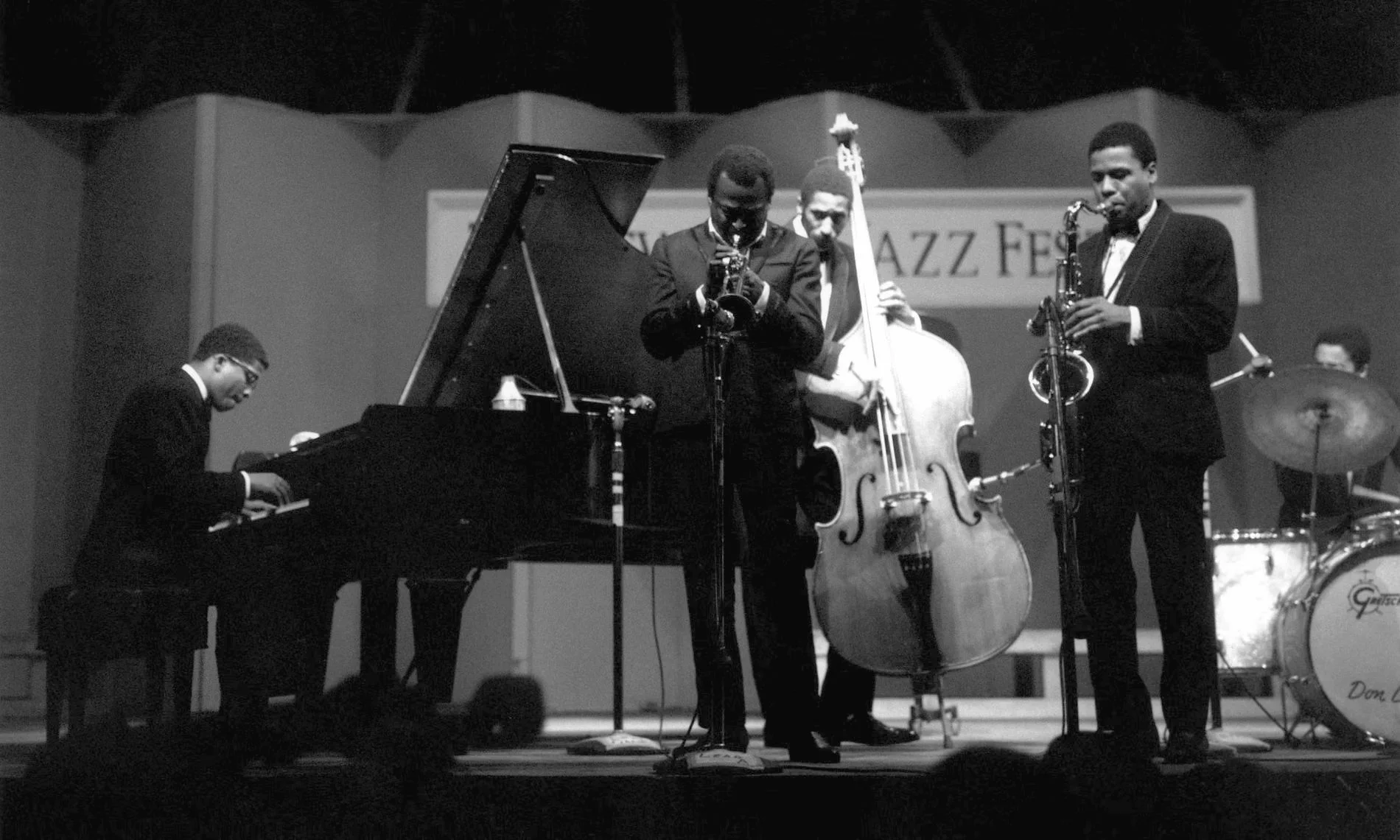
The spotlight burns hot, 1969.
The “Lost Quintet” loud and plugged in
Wayne on soprano saxophone,
Miles’ frontline kinsman
effortless, timeless, familial.
Tearing the blueprint apart
Shifting like smoke over Paris
The quiet fire over the exploding engine room
Chick Corea in his natural element
electric ivory sinews Fender Rhodes warped,
Ring-modulated, beautiful harsh energy
Dave and Jack whip up an unholy, electric tempest.
Memory slips thirteen years deep.
Back to Hackensack
Van Gelder’s living room studio, pristine and quiet.
The First Great Quintet.
Five minds moving as a single flawless machine.
The mandate: deliver four albums
no second takes. No rehearsing,
loose vibe a brotherhood at its peak
Yet a foreshadowed goodbye
Breaking the lease Prestige holds on their souls.
Back in ‘69 electric whirlpool
Sharp contrasts
intimate night lit perfection.
Then, it was swinging hard within the lines,
Now, it’s erasing the lines entirely.
Two distinct eras, bound by the same restless spirit.
One quintet breaking apart
while catching lightning in a bottle.
The other, shattering bottles to build a new world.
My single most pervasive influence was Miles Davis. I was already working at KUVO when he passed. Two weeks after he died, I dreamt I was sitting in on a session, actually recording with Miles.
It didn’t feel like a dream, and I had enough confidence to feel I belonged there, laying down some funky bass on my Fender.
The session ends, and everyone is smiling, happy. Miles walks up to me, puts his hand on my shoulder, and says in that whisper, “Nice… that went well, but, (pause looking over the shades), if you playin’ with me…you must be dead.” I sat up in a cold sweat, stunned… freaked out and alive. Not counting that, I saw Miles 5 times.
Red Rocks Return September 1981: Fog rolling in, me in awe. Finally seeing my hero live. Miles, Stern, and Marcus Miller, Red Rocks Amphitheatre under grey windswept low clouds. Hinting at rain, the way Miles plays his Harmon mute. It was cold, but he didn’t have rain gear on. Cool in the cold. He opened for Spro Gyra. We bounced before the rain came and soaked the smooth jazz.
Three gigs at the Rainbow, 1983 and 1985: Stern and Scofield! Miles on keyboards and a startling Red Trumpet engraved with Moon and Stars. Bill Evans, the sax player, also lent a hand on keys. Not to mistake his playing that Oberheim with the “other” Bill Evans (who was dead by then). This was right after the Star People album dropped.
The date in ‘85 was after his album You’re Under Arrest dropped with Bob Berg and Darryl Jones, but right before Jones joined The Blue Turtles band that backed Sting at the time. All these many years later, my memory blended those shows. A friend of mine has bootlegs of those concerts. I’m not tellin’.
Farewell at Fiddlers Green, June 1990:
The only time I saw the Yellowjackets. Kenny Garrett on sax, Foley McCreary on bass, and Erin Davis on percussion playing with his Dad. Miles and Kenny! HISTORIC! Miles had cue cards to introduce the cats. Foley was fresh out of George Clinton’s employ. Kenny Garrett tore it up. People were leaving, they dug “The Spin” from the ‘Jackets, but the improvisation Aura/Prince/Sly funk was too much for them, but I’ll never get tired of his music.
100 years of Miles Davis. A one-man jazz finishing school! And a LEGEND!
Stay connected to KUVO’s programs and our community! Sign up for the Oasis E-News today!
Bibendum ut tristique et egestas quis. Dignissim diam quis enim lobortis scelerisque. Et ligula ullamcorper malesuada proin libero. Rhoncus est pellentesque elit ullamcorper dignissim cras tincidunt lobortis feugiat. Feugiat nibh sed pulvinar proin gravida hendrerit lectus.
Tincidunt augue interdum velit euismod in pellentesque. Vitae tempus quam pellentesque nec nam aliquam sem et. In vitae turpis massa sed elementum tempus egestas sed sed. Sem viverra aliquet eget sit amet tellus. Nisl condimentum id venenatis a condimentum vitae.
Risus feugiat in ante metus dictum. Scelerisque varius morbi enim nunc faucibus a pellentesque sit. Eros donec ac odio tempor orci dapibus.
Bibendum ut tristique et egestas quis. Dignissim diam quis enim lobortis scelerisque. Et ligula ullamcorper malesuada proin libero. Rhoncus est pellentesque elit ullamcorper dignissim cras tincidunt lobortis feugiat. Feugiat nibh sed pulvinar proin gravida hendrerit lectus.
Tincidunt augue interdum velit euismod in pellentesque. Vitae tempus quam pellentesque nec nam aliquam sem et. In vitae turpis massa sed elementum tempus egestas sed sed. Sem viverra aliquet eget sit amet tellus. Nisl condimentum id venenatis a condimentum vitae.
Risus feugiat in ante metus dictum. Scelerisque varius morbi enim nunc faucibus a pellentesque sit. Eros donec ac odio tempor orci dapibus.
Bibendum ut tristique et egestas quis. Dignissim diam quis enim lobortis scelerisque. Et ligula ullamcorper malesuada proin libero. Rhoncus est pellentesque elit ullamcorper dignissim cras tincidunt lobortis feugiat. Feugiat nibh sed pulvinar proin gravida hendrerit lectus.
Tincidunt augue interdum velit euismod in pellentesque. Vitae tempus quam pellentesque nec nam aliquam sem et. In vitae turpis massa sed elementum tempus egestas sed sed. Sem viverra aliquet eget sit amet tellus. Nisl condimentum id venenatis a condimentum vitae.
Risus feugiat in ante metus dictum. Scelerisque varius morbi enim nunc faucibus a pellentesque sit. Eros donec ac odio tempor orci dapibus.
Bibendum ut tristique et egestas quis. Dignissim diam quis enim lobortis scelerisque. Et ligula ullamcorper malesuada proin libero. Rhoncus est pellentesque elit ullamcorper dignissim cras tincidunt lobortis feugiat. Feugiat nibh sed pulvinar proin gravida hendrerit lectus.
Tincidunt augue interdum velit euismod in pellentesque. Vitae tempus quam pellentesque nec nam aliquam sem et. In vitae turpis massa sed elementum tempus egestas sed sed. Sem viverra aliquet eget sit amet tellus. Nisl condimentum id venenatis a condimentum vitae.
Risus feugiat in ante metus dictum. Scelerisque varius morbi enim nunc faucibus a pellentesque sit. Eros donec ac odio tempor orci dapibus.
Bibendum ut tristique et egestas quis. Dignissim diam quis enim lobortis scelerisque. Et ligula ullamcorper malesuada proin libero. Rhoncus est pellentesque elit ullamcorper dignissim cras tincidunt lobortis feugiat. Feugiat nibh sed pulvinar proin gravida hendrerit lectus.
Tincidunt augue interdum velit euismod in pellentesque. Vitae tempus quam pellentesque nec nam aliquam sem et. In vitae turpis massa sed elementum tempus egestas sed sed. Sem viverra aliquet eget sit amet tellus. Nisl condimentum id venenatis a condimentum vitae.
Risus feugiat in ante metus dictum. Scelerisque varius morbi enim nunc faucibus a pellentesque sit. Eros donec ac odio tempor orci dapibus.